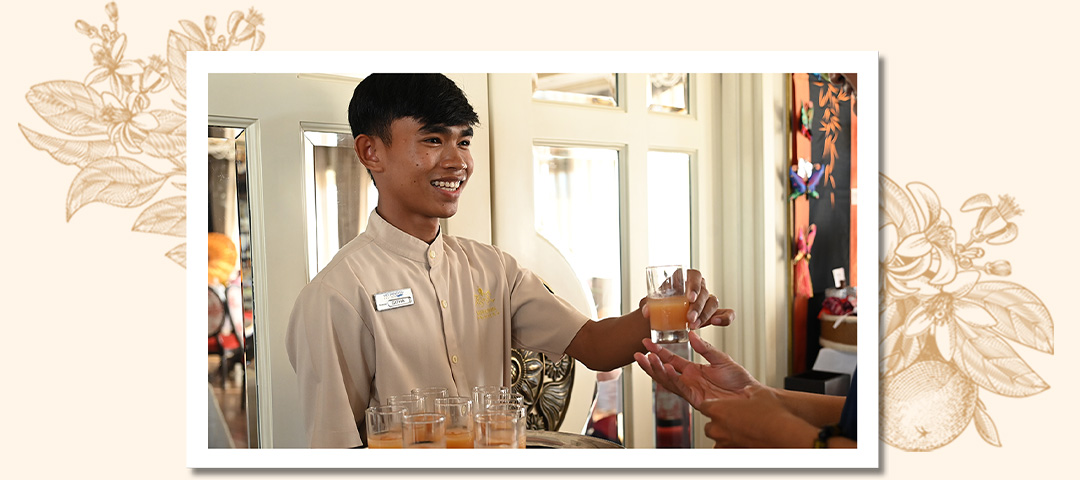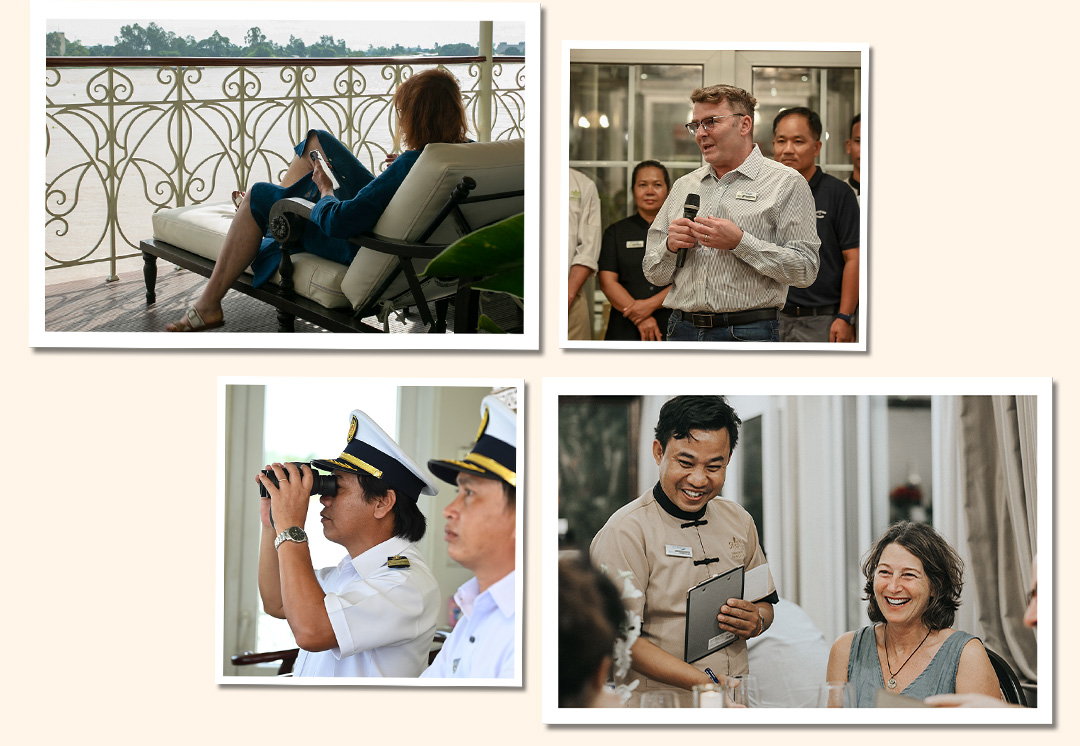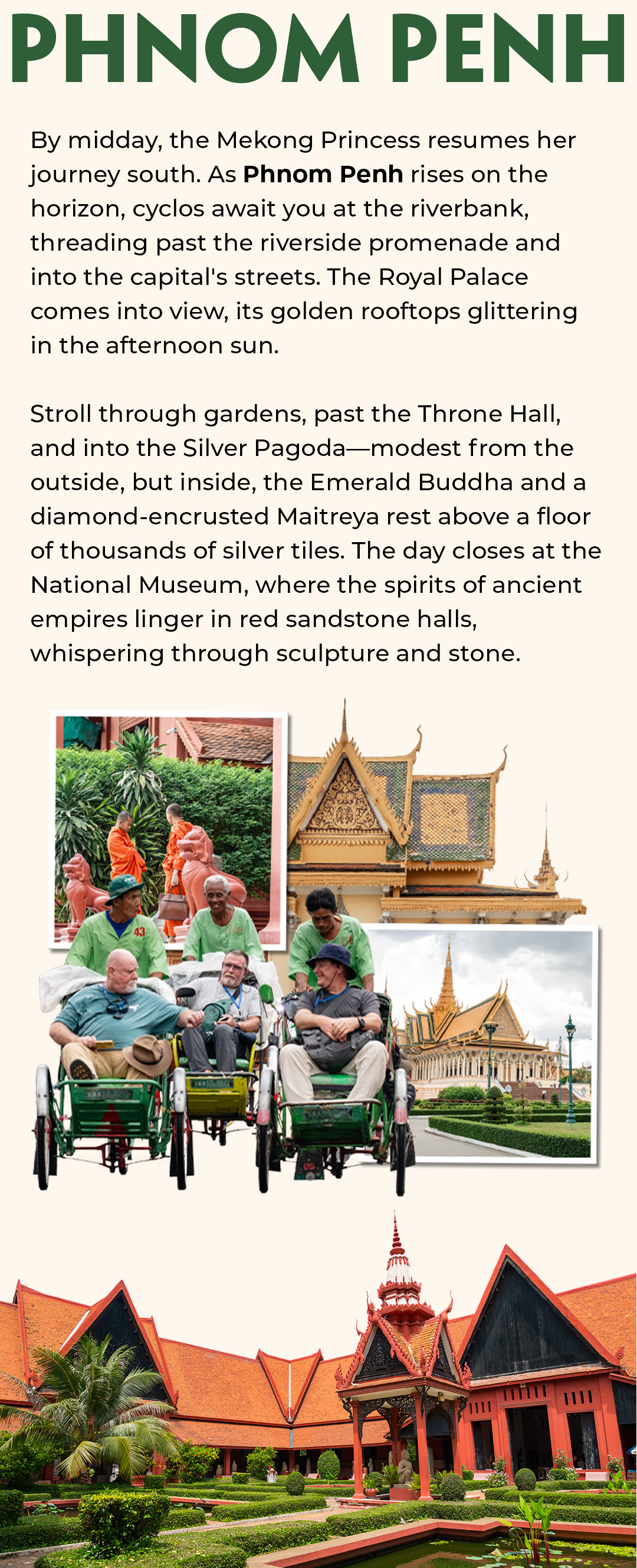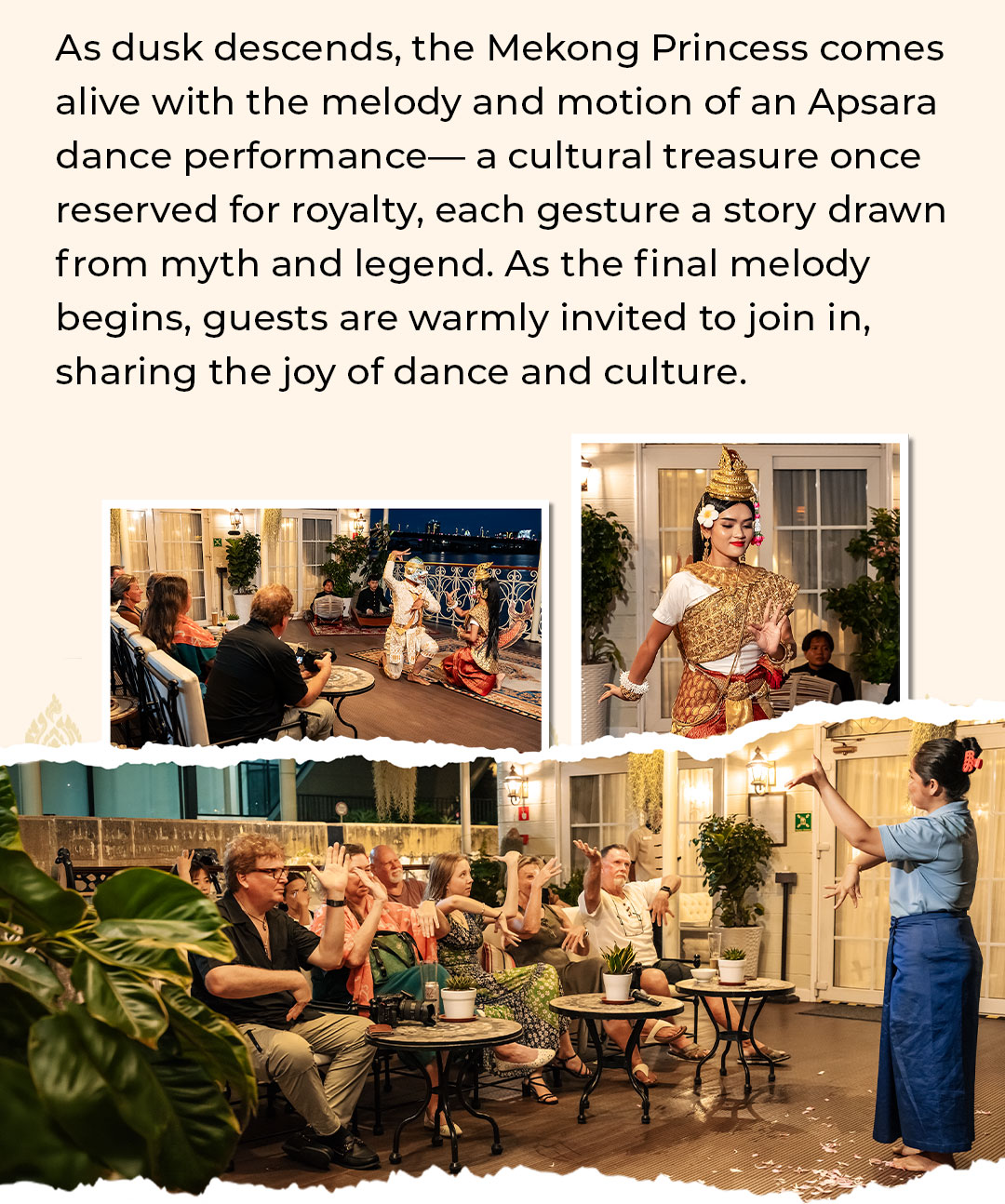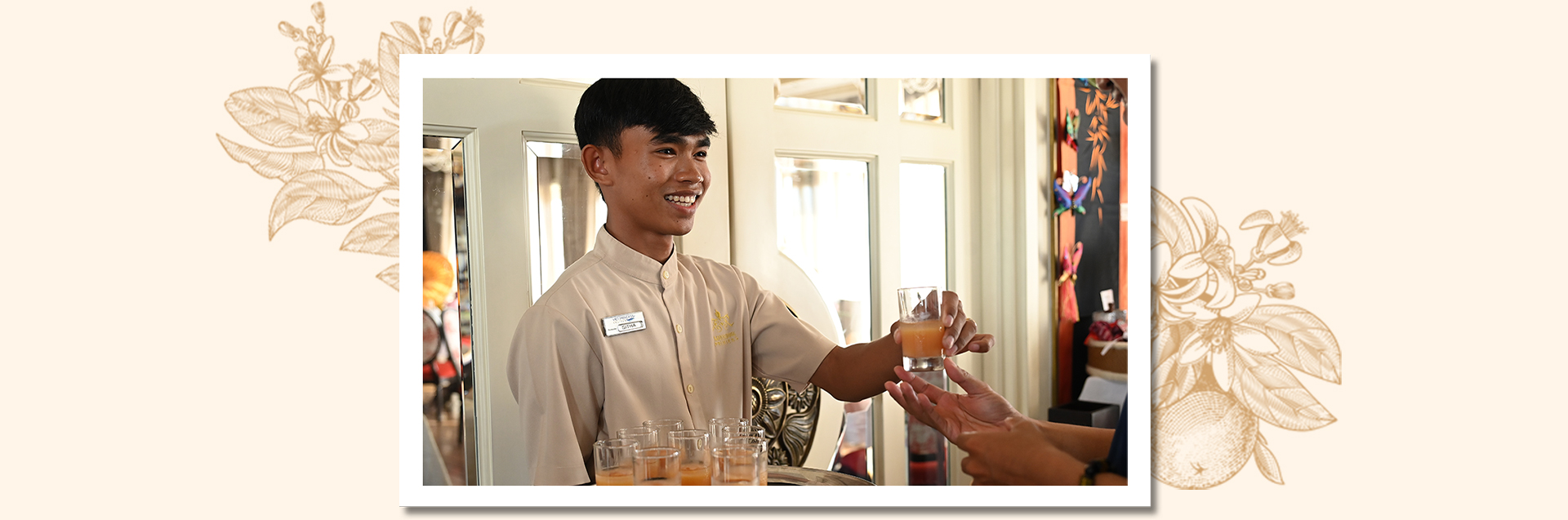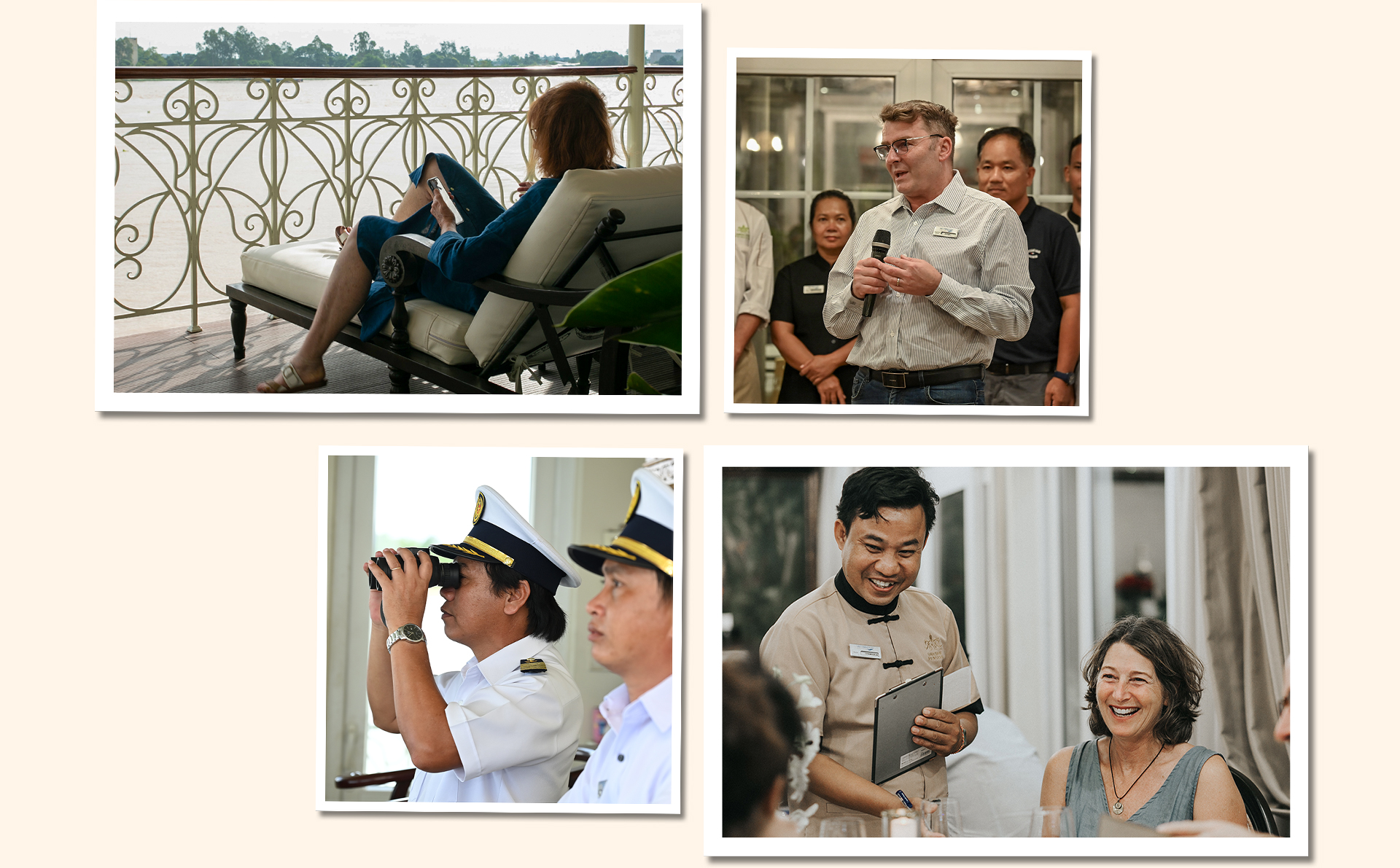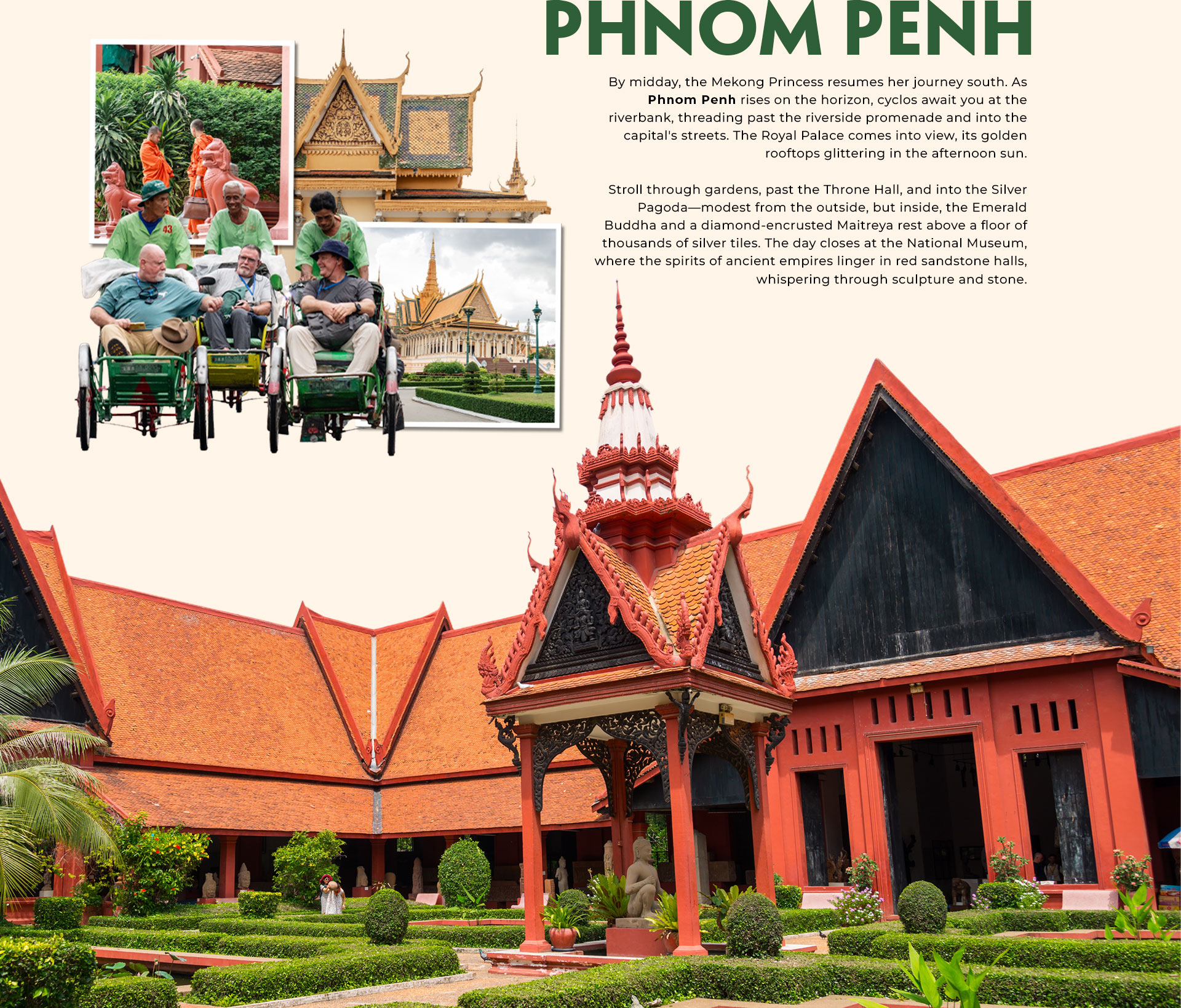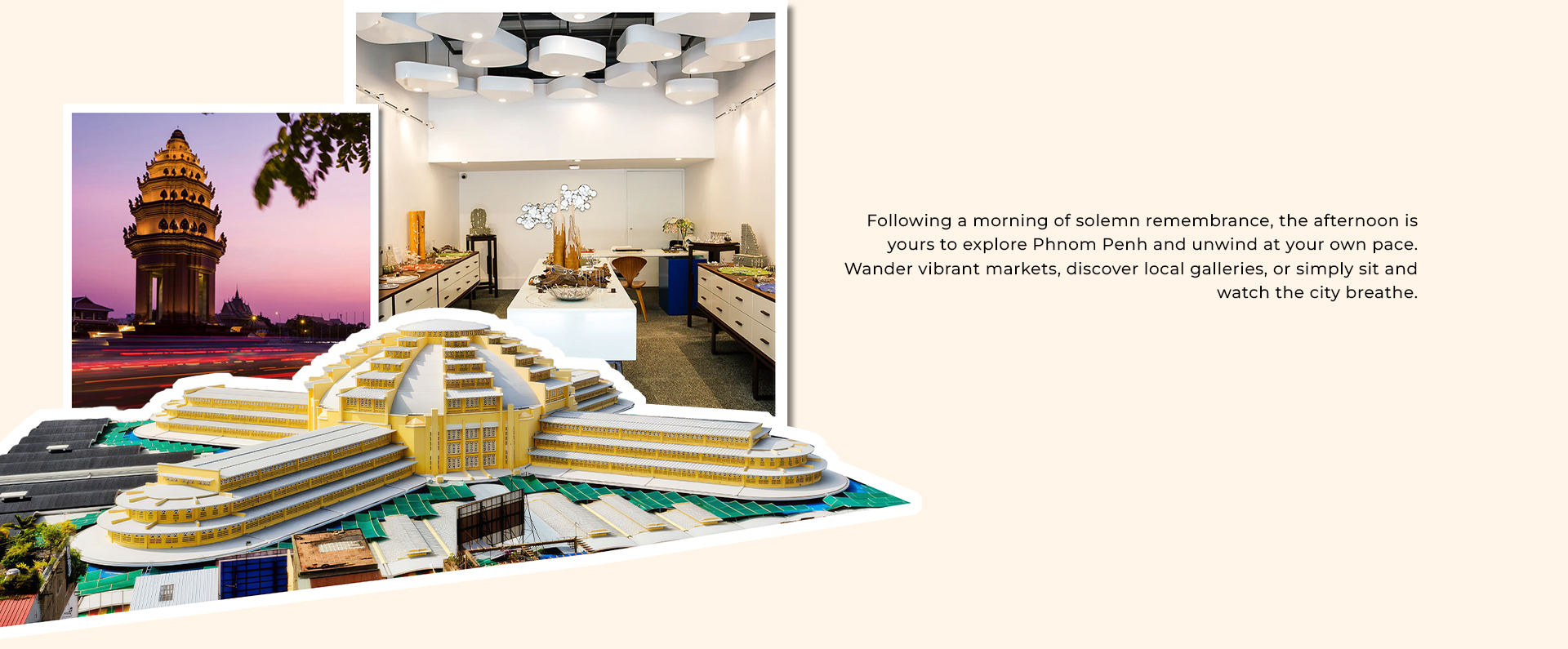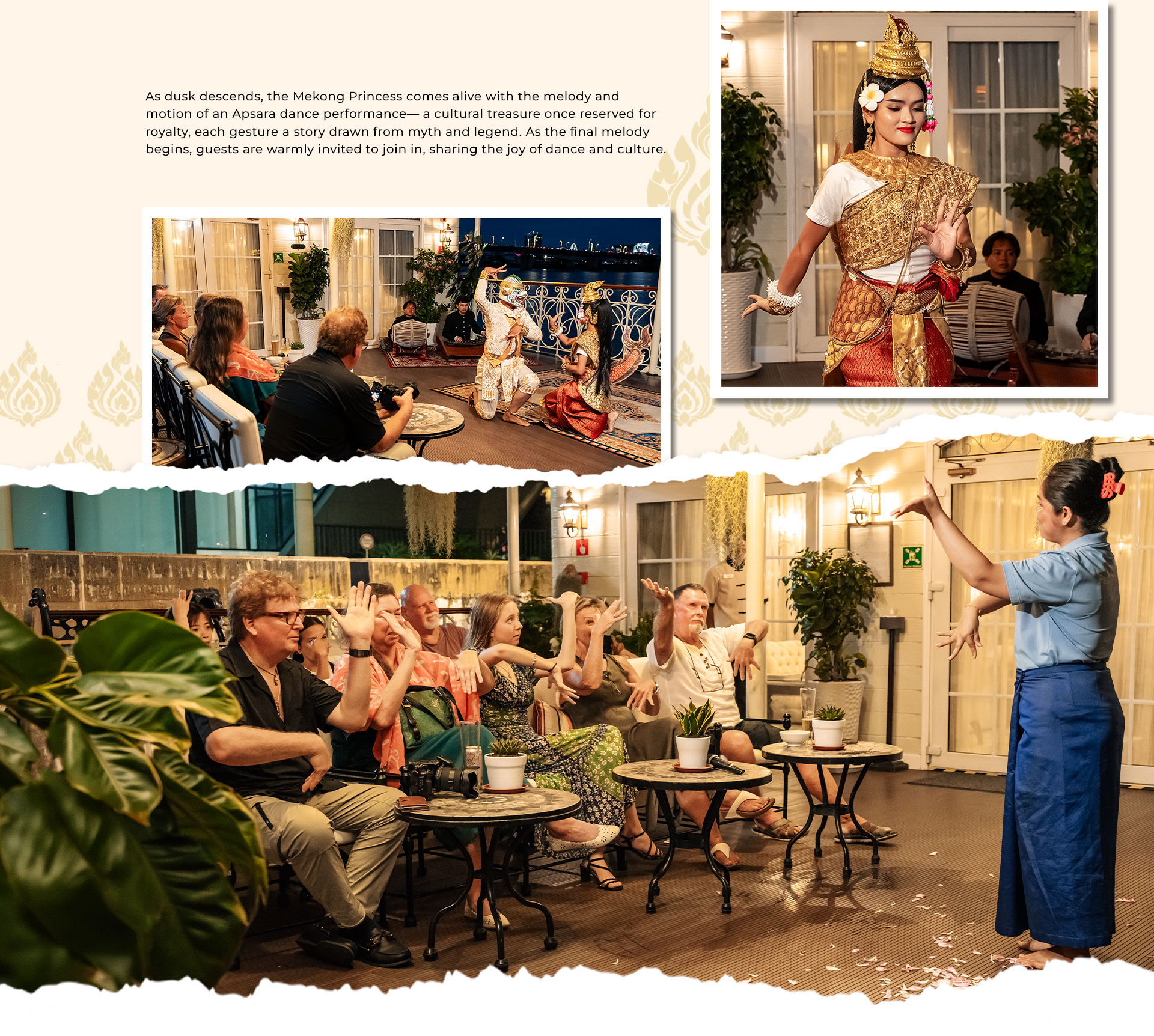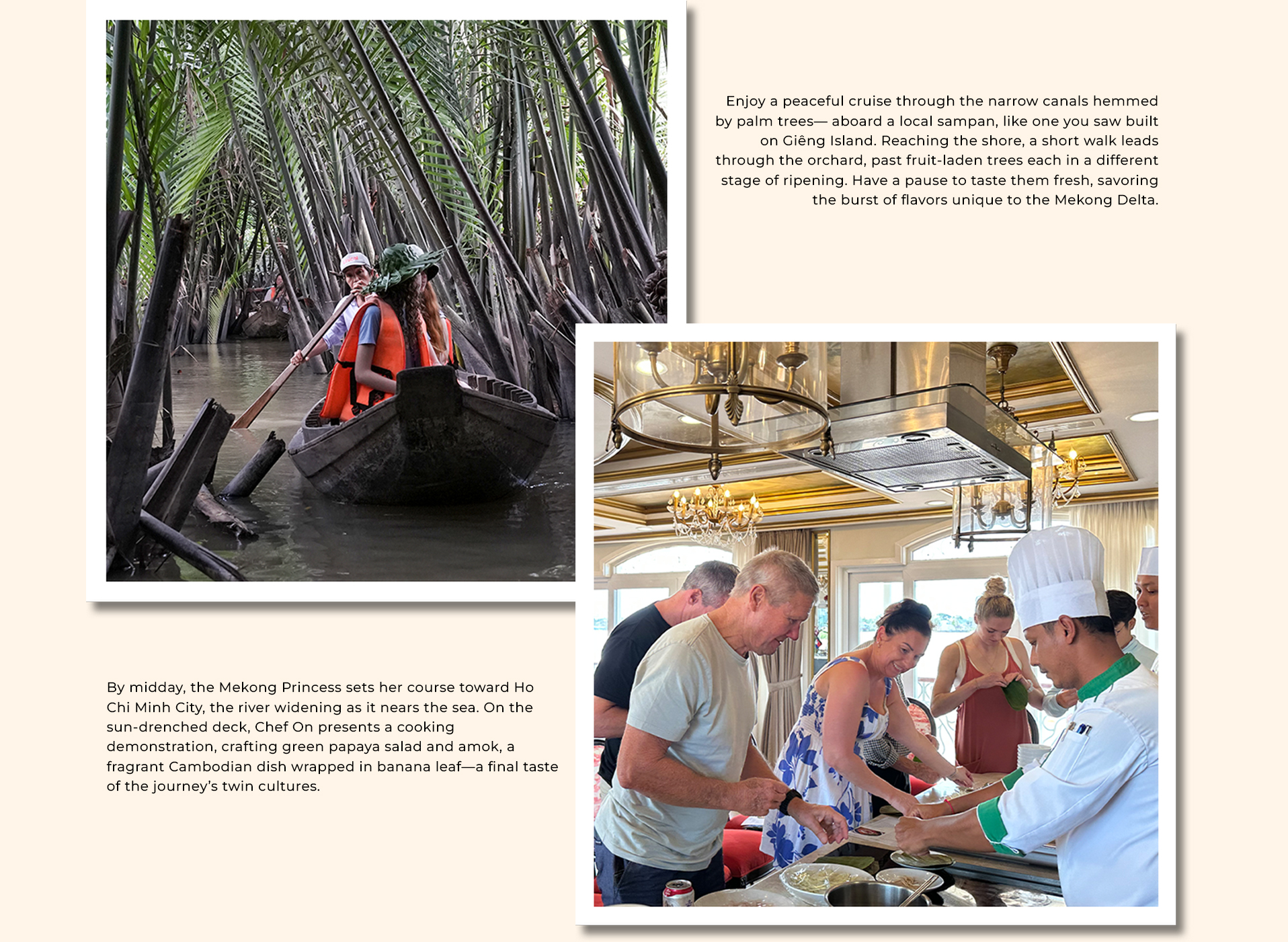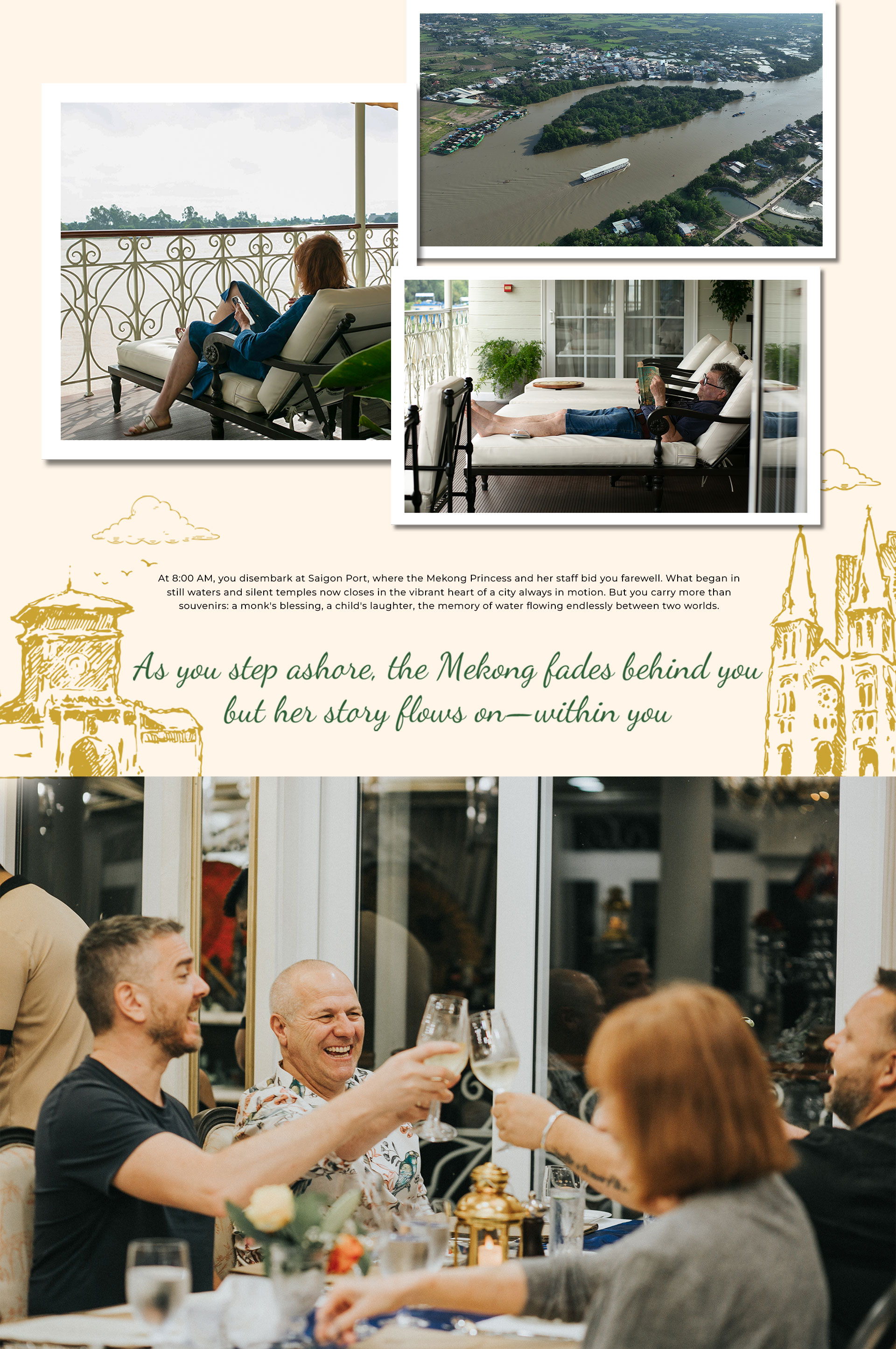
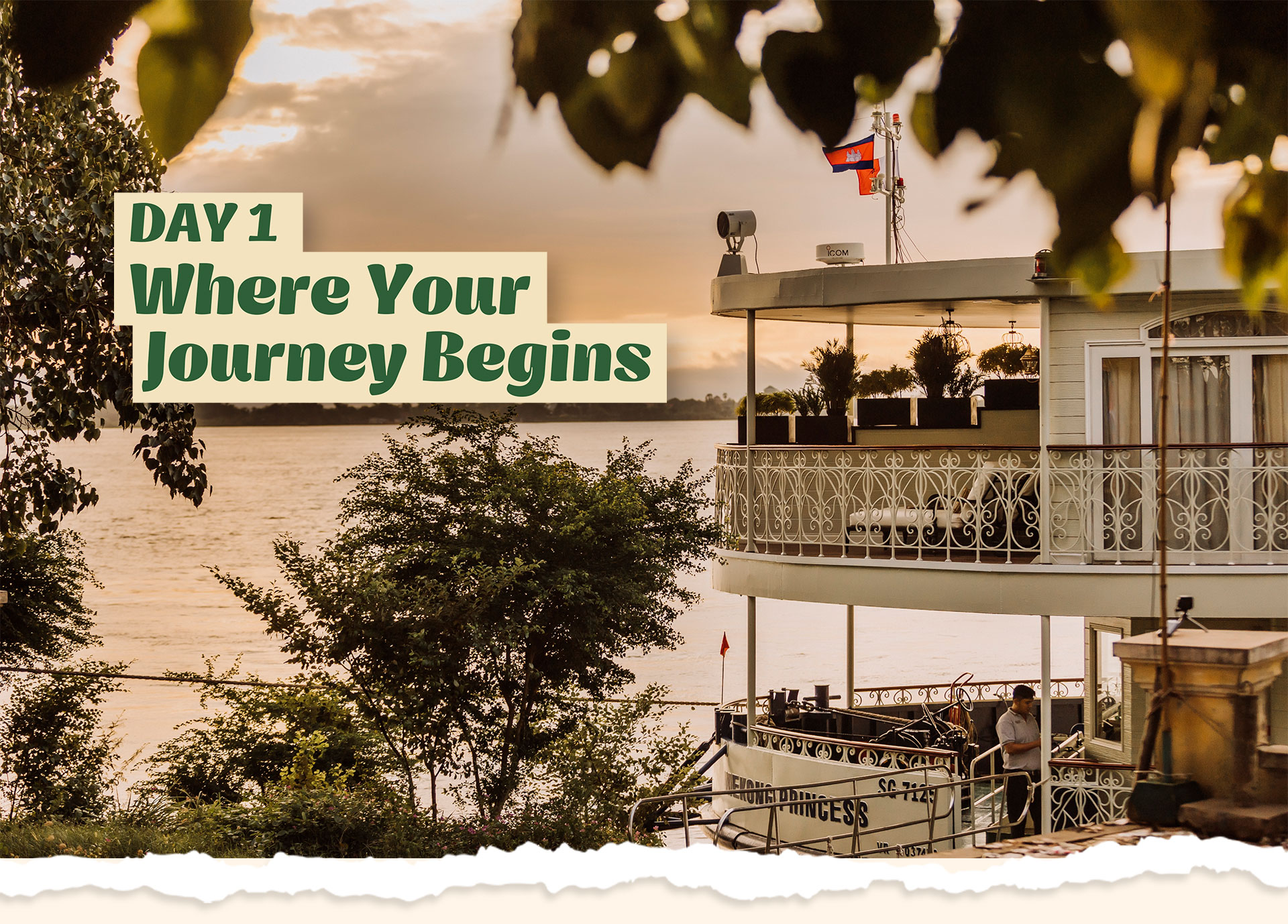
Your Mekong journey starts on land. From Siem Reap, a private motor-coach threads through the Cambodian countryside — past rice paddies, village shrines, and the fading grandeur of Angkor — before delivering you to Kampong Cham. There, the Mekong Princess awaits, with cool towels, chilled drinks, and warm smiles. 
Once underway and gliding south, guests gather in the Ramvong Lounge for a welcome briefing from Eric, the ship's Hospitality Director. Lunch is served as the river scrolls past the windows. By nightfall, the Princess moors near Angkor Ban, and after dinner, the day gives way to the kind of rest only moving water can deliver.
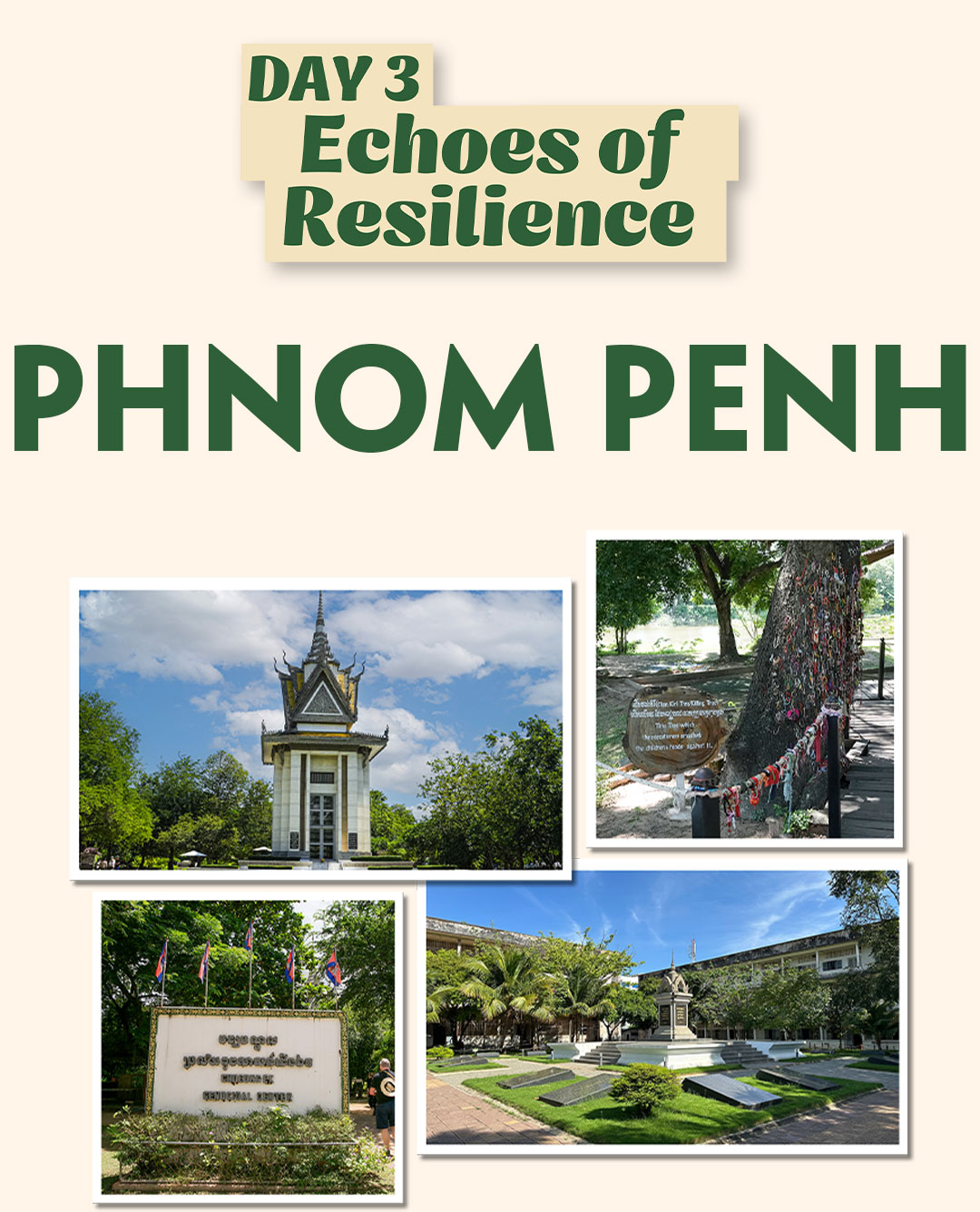
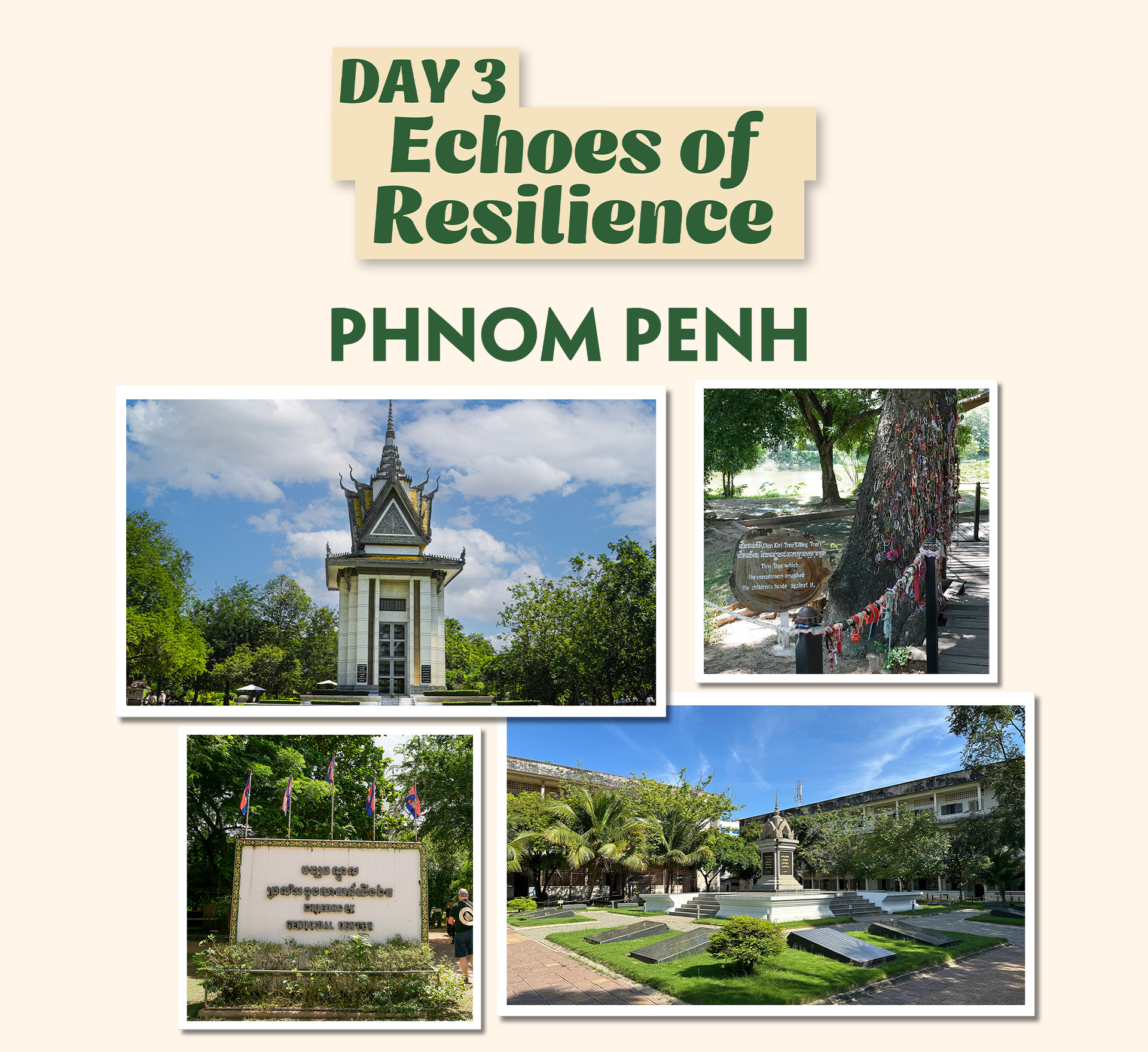
Morning leads you beyond the city and to the countryside, where Cambodia’s sorrowful past is laid bare. At Choeung Ek, known to the world as the Killing Fields, butterflies drift over sun-dappled grass as you walk through memorial grounds where countless lives were lost during the Khmer Rouge regime. The Memorial Stupa, filled with shattered fragments of history, stands as a tribute, a reminder, and a vow never to forget. 

On the journey back to the city, you pause at Tuol Sleng. Once a school echoing with children’s laughter, it was transformed into a prison of unthinkable cruelty. Stark classrooms, rusted bedframes, and faded photographs  speak plainly of the suffering endured and of the strength that survived it.
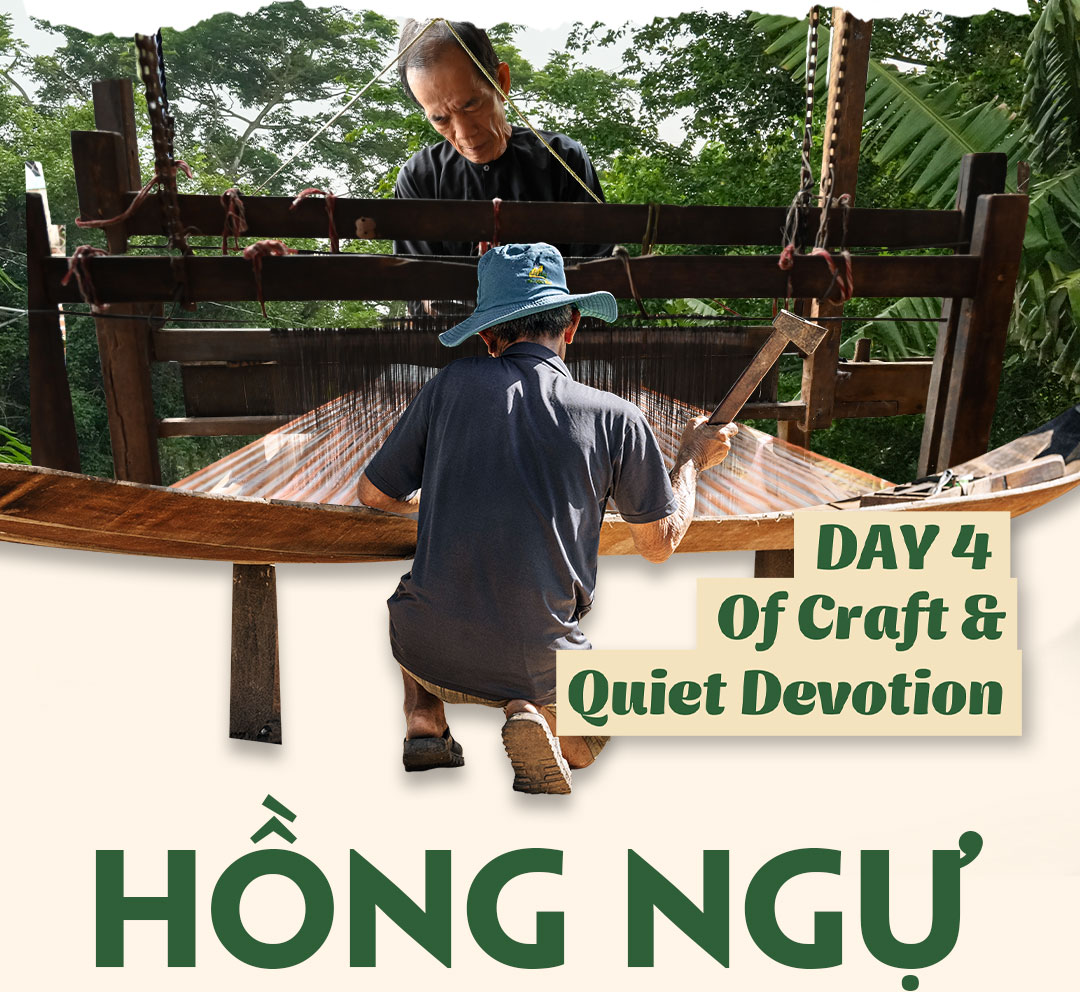
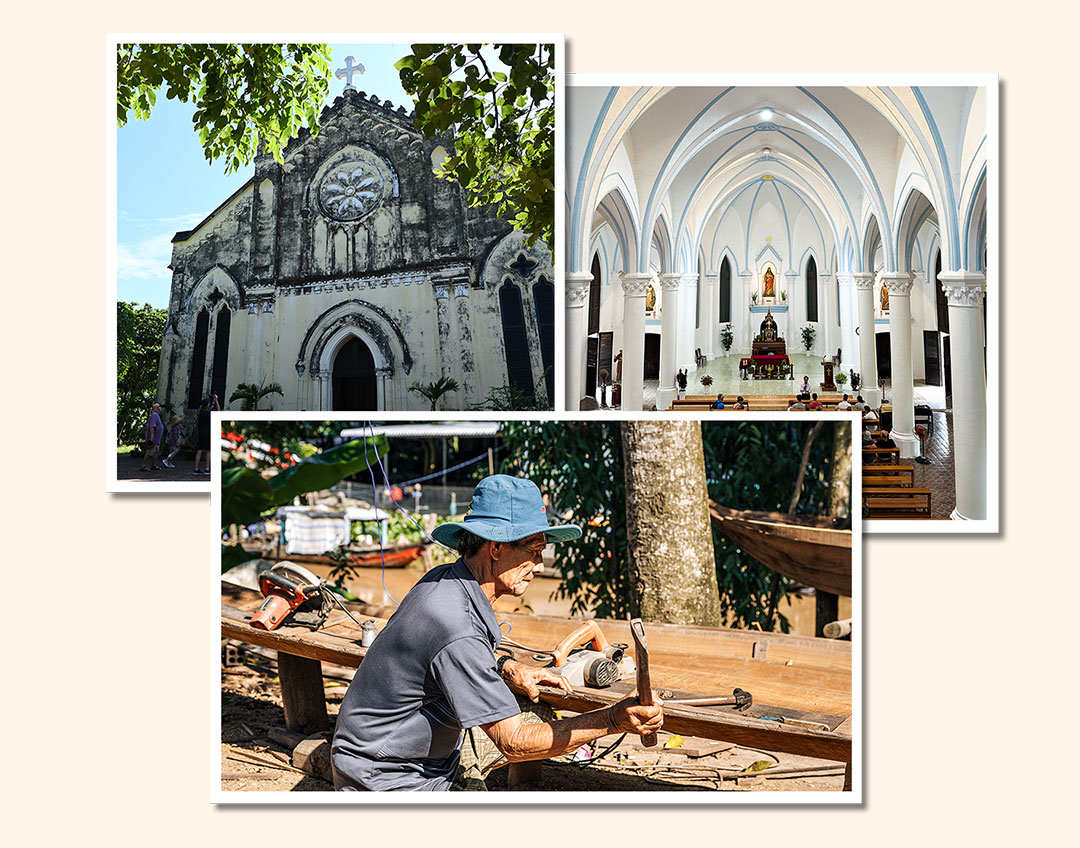
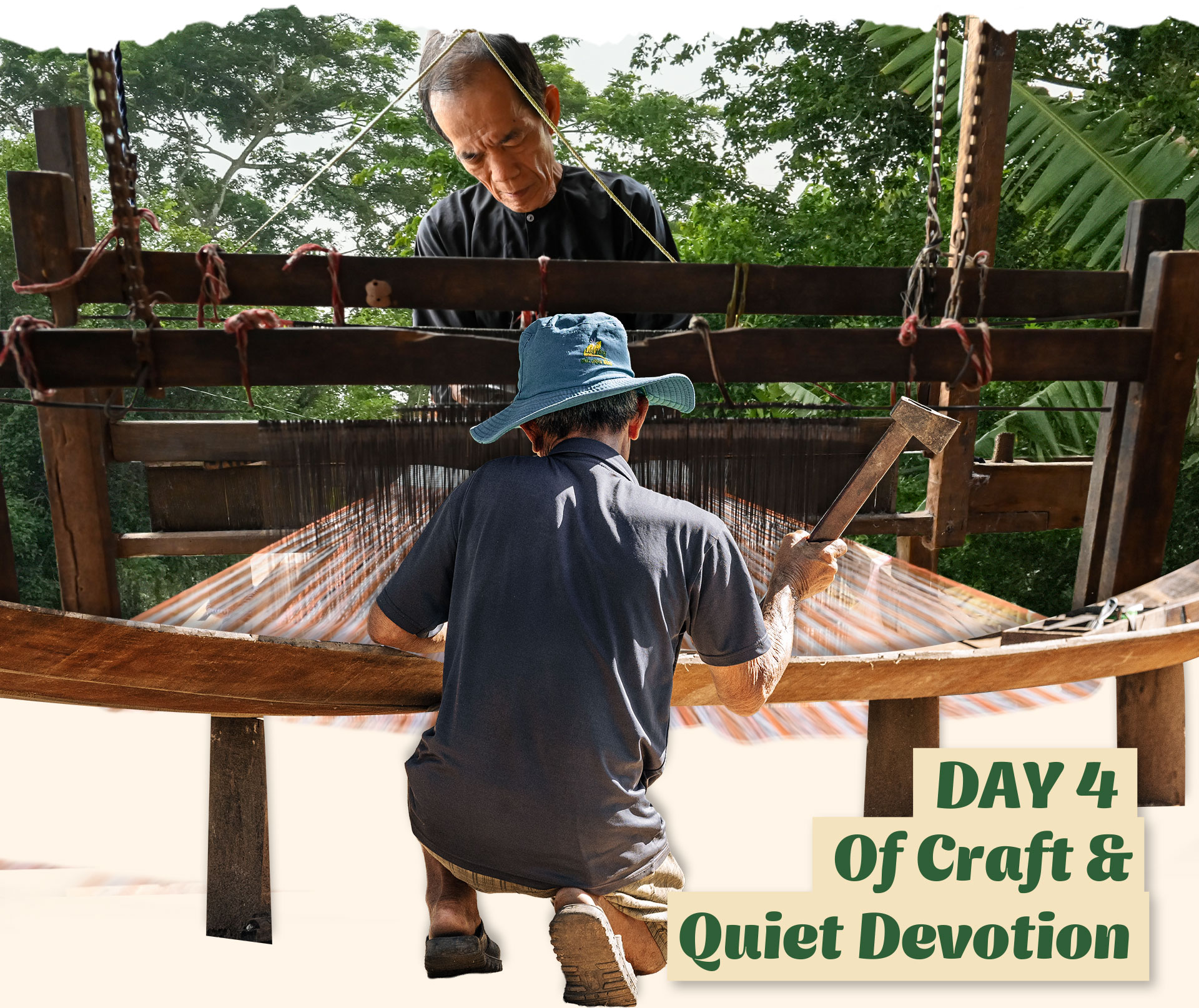
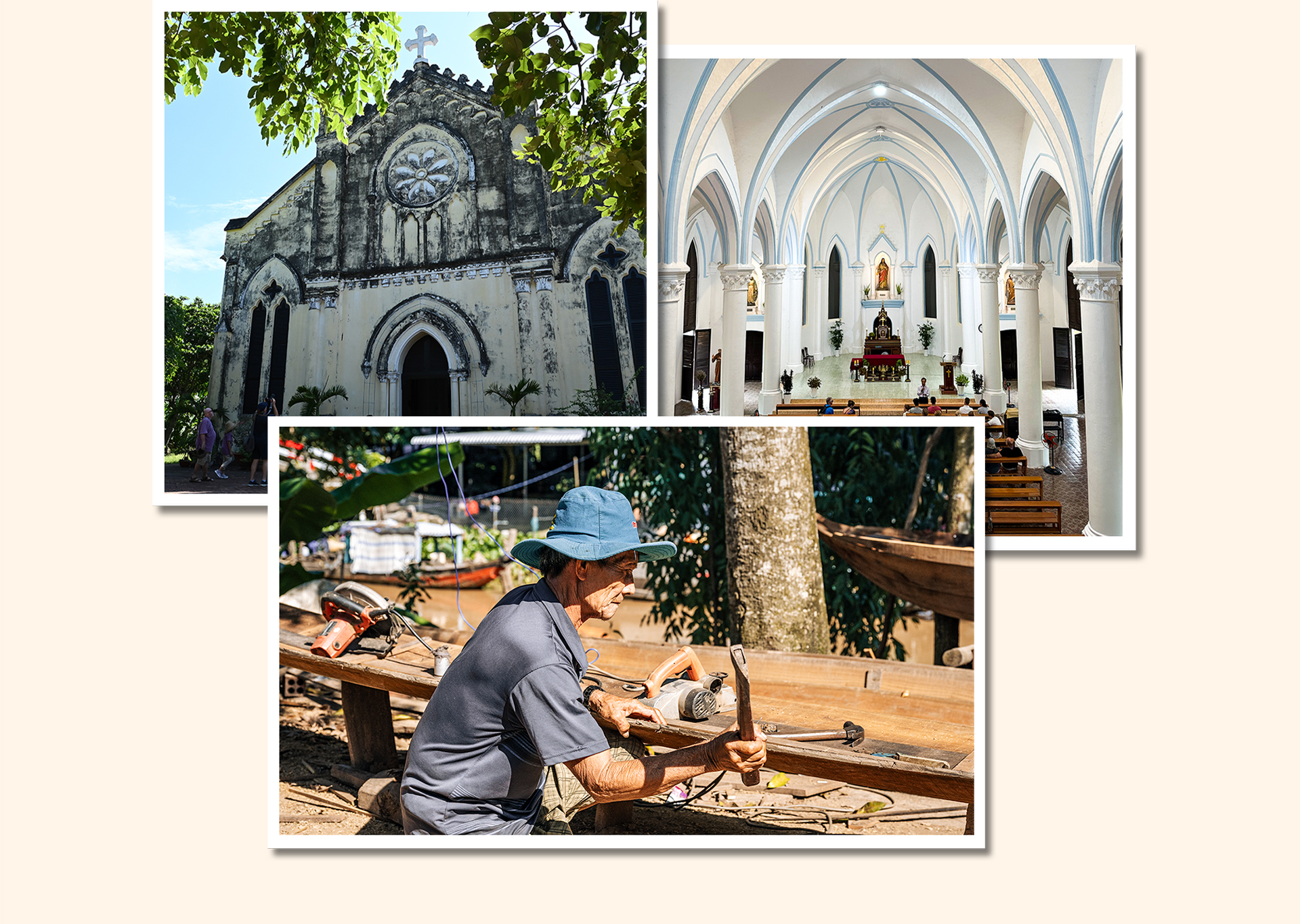
After lunch, the Princess makes her way to Giêng Island. Stepping ashore, you meet one of the families who handcraft sampans — the everyday wooden boats of the Mekong — and watch as the boatmaker walks you through their process, plank by plank. Back on the water, a short boat ride leads to shore, where a line of xe lôi (local motor carts) bump and buzz through verdant village paths, delivering you to the Phanxico Monastery, whose Gothic spires have watched over the village since the 19th century.
Hòa An - title

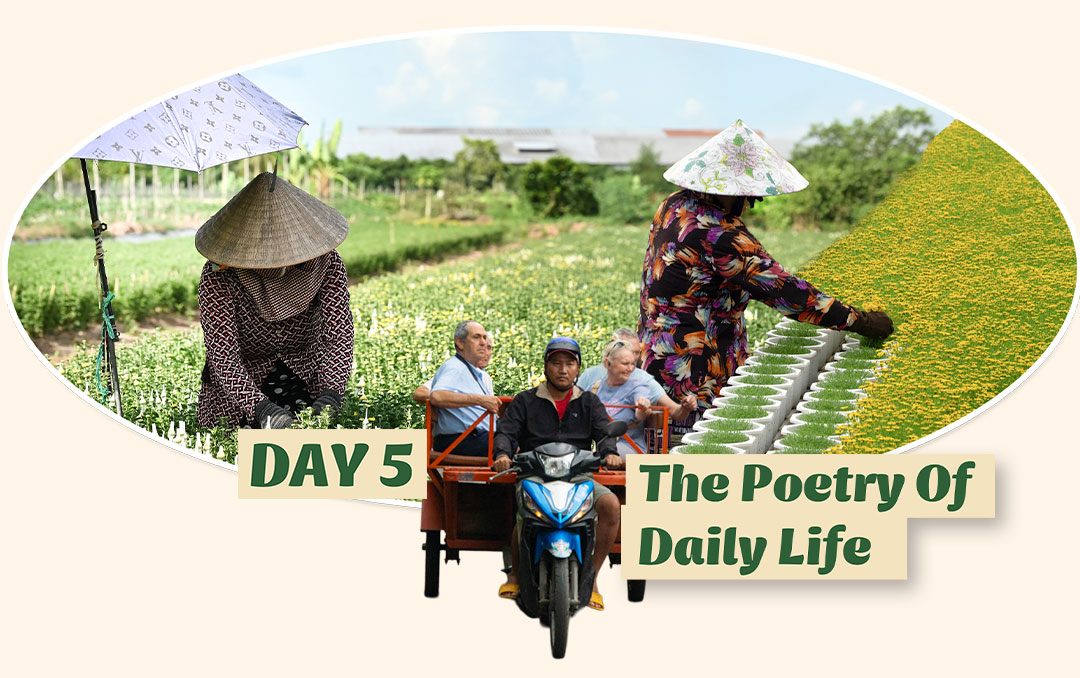
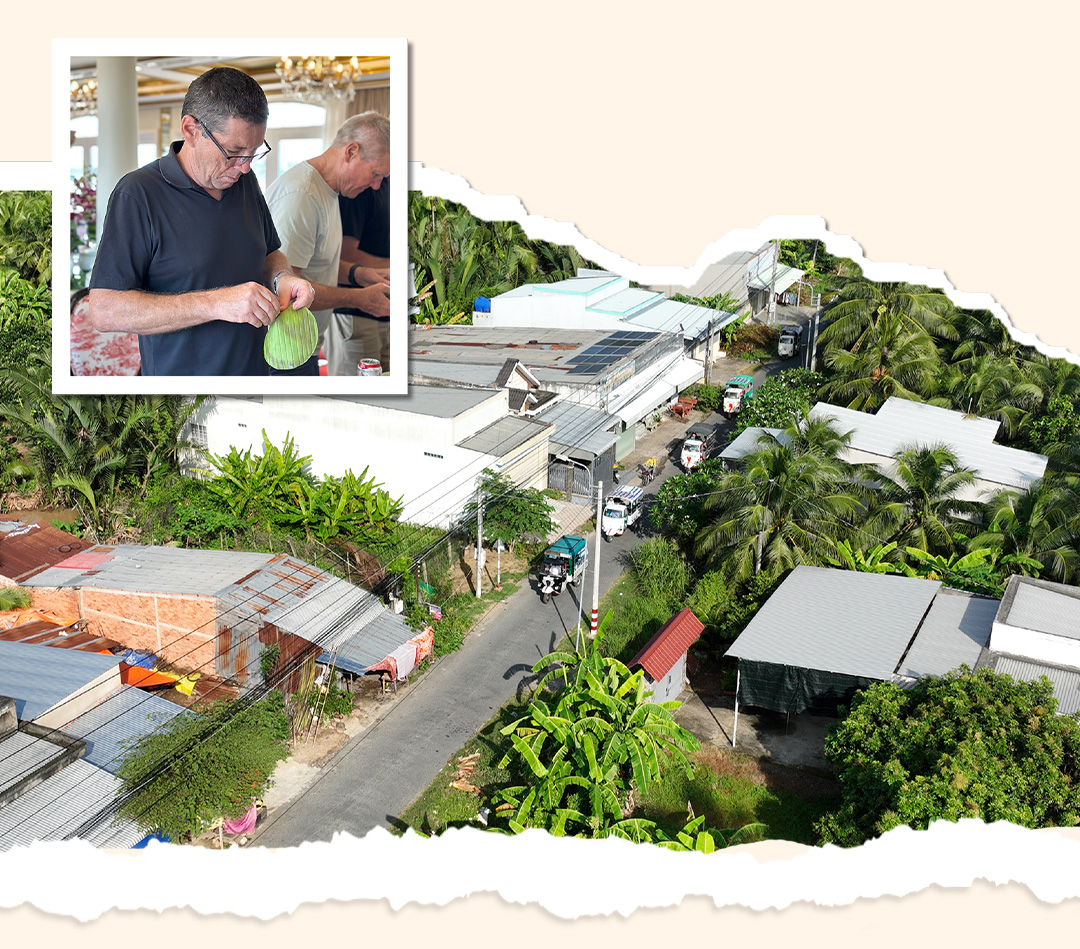
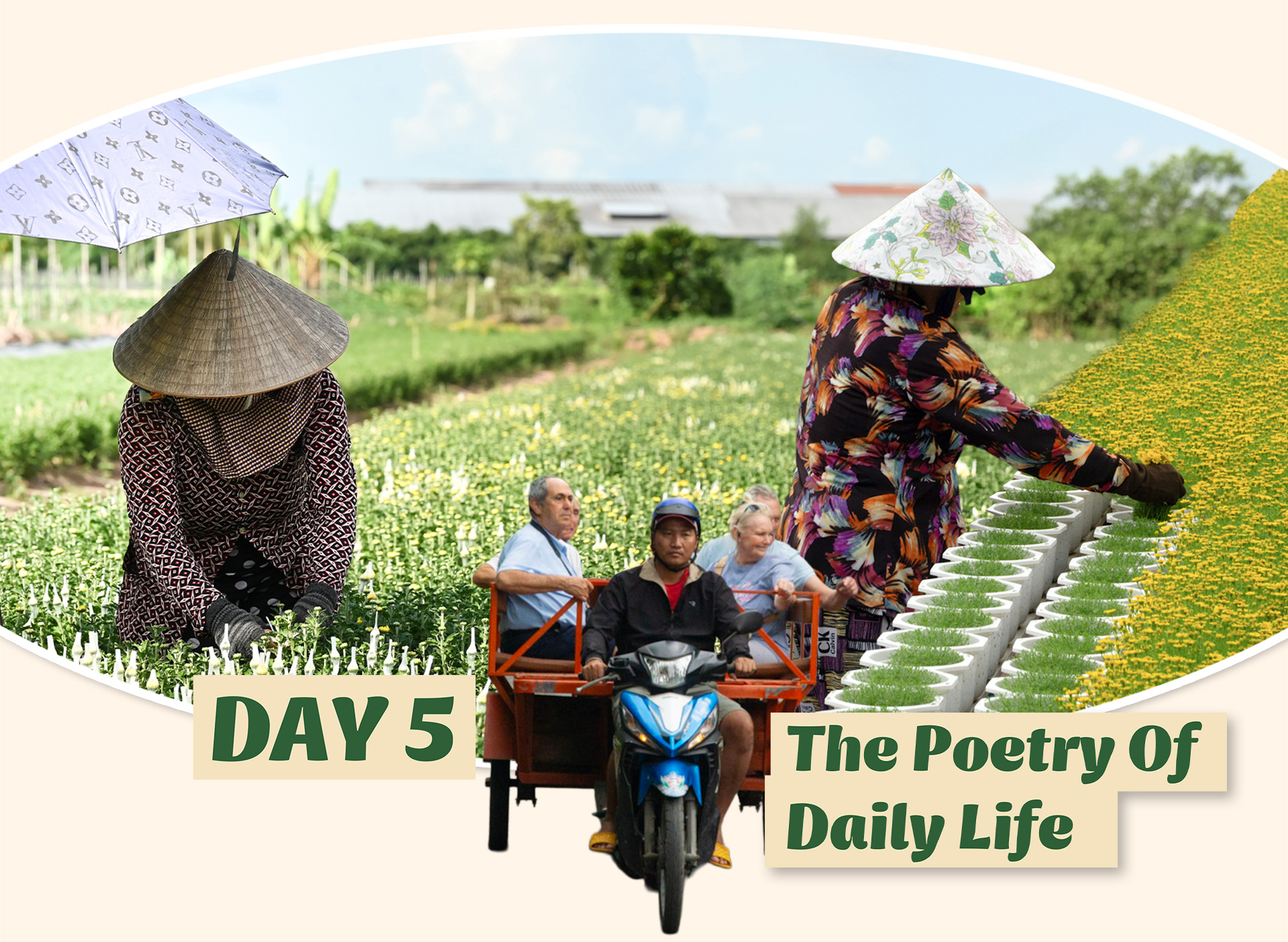
Morning finds you in Hòa An Village, a rural commune that lives by the rhythm of its gardens and fields. Ashore, a fleet of xe lôi (local motor carts) carries you along narrow roads bordered by emerald paddies and fruit orchards, past farmers tending their crops in the early light.

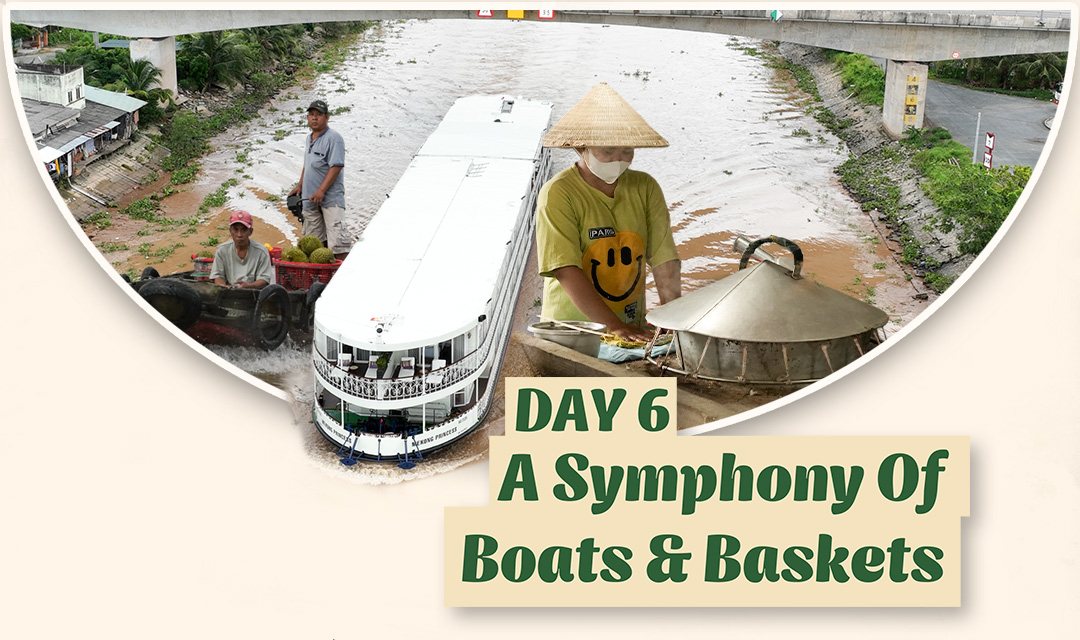
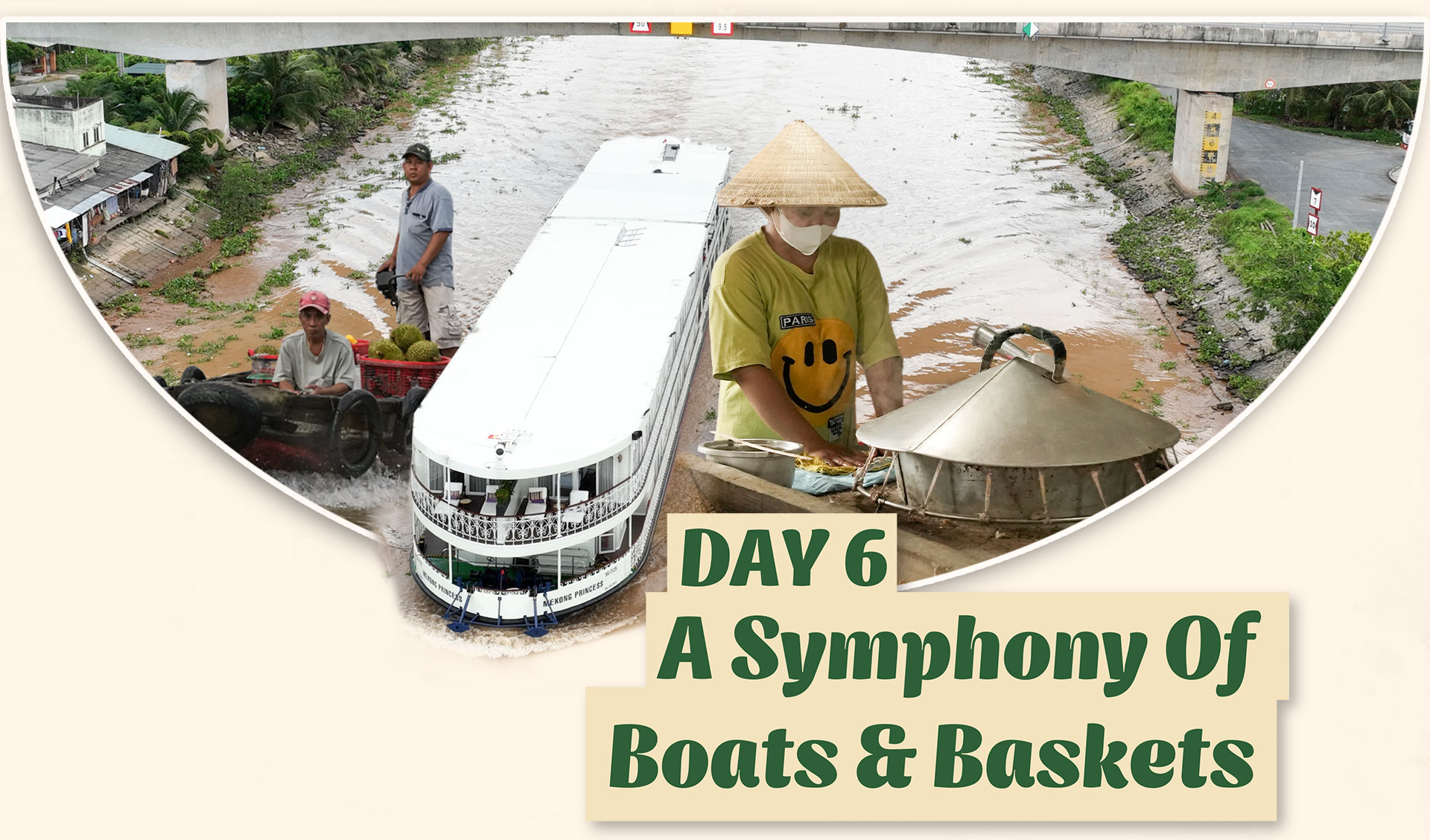
Back on boat, the route passes the region's rice milling centers — boatloads of grain unloaded, milled, and sorted for the country's daily meals, the whole operation humming at the water's edge.

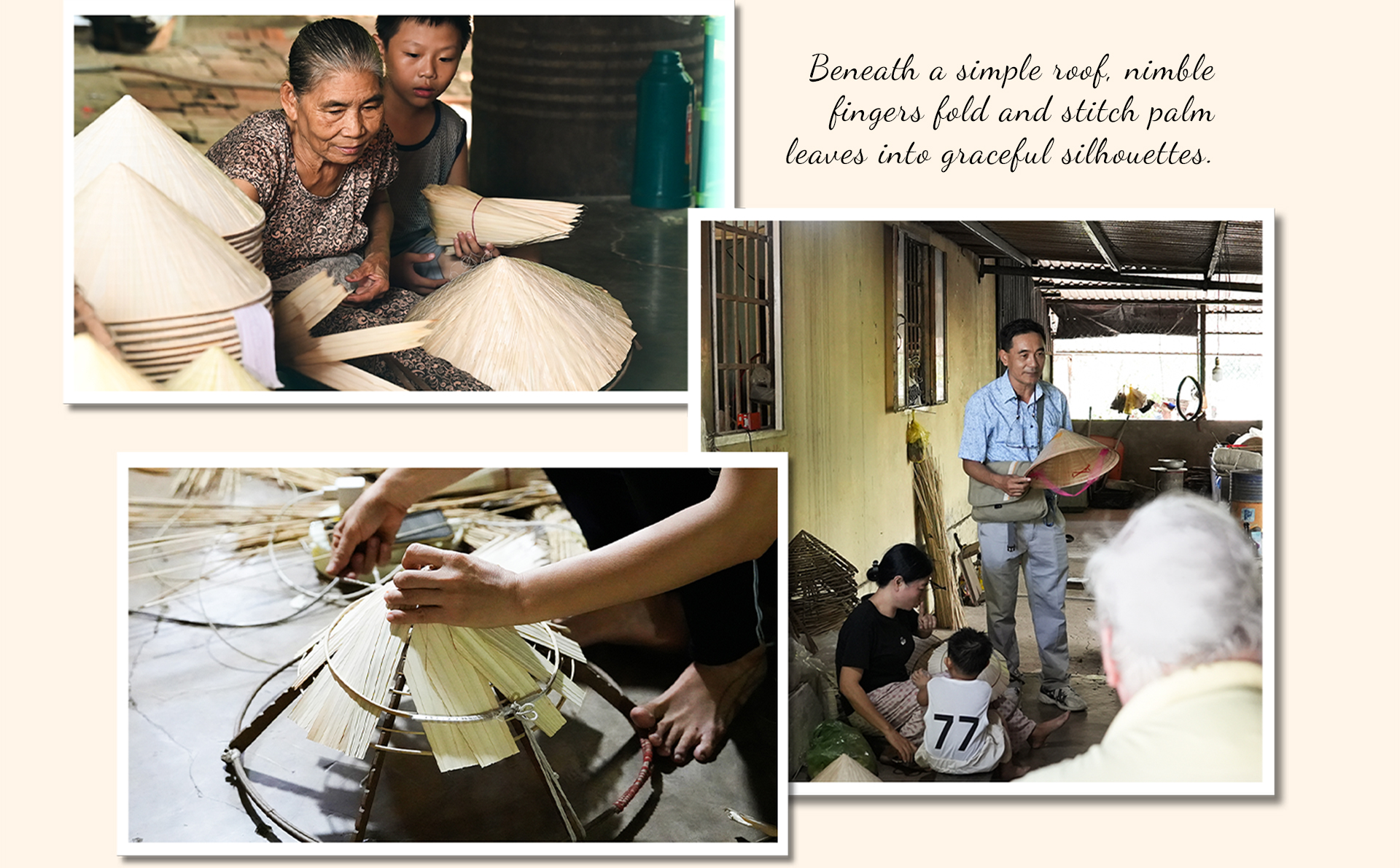
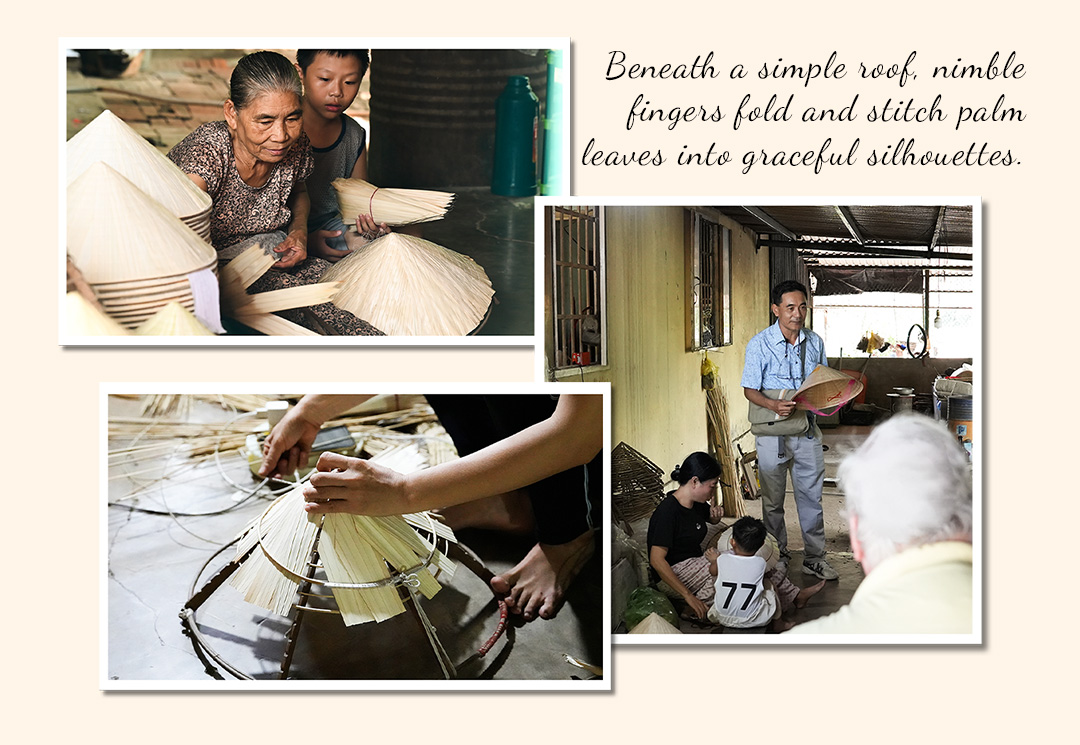
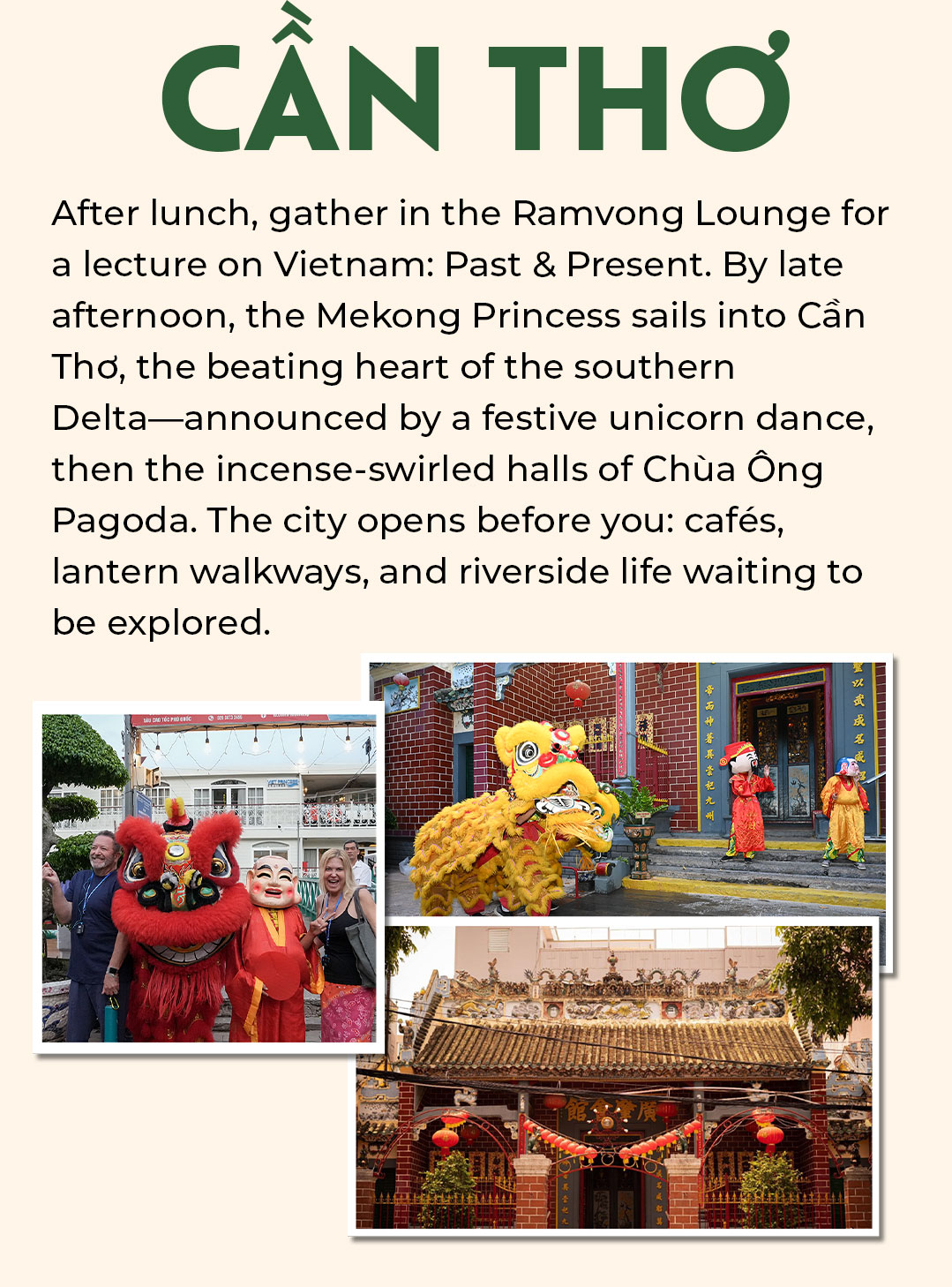
The morning ends in the home of a conical hat artisan. Beneath a simple roof, nimble fingers fold and stitch palm leaves into graceful silhouettes. Here, tradition lives not as performance, but as daily practice. A soft smile, a shared story, a quiet moment with the maker — a memory pressed gently into your hands.
Nón Lá - img
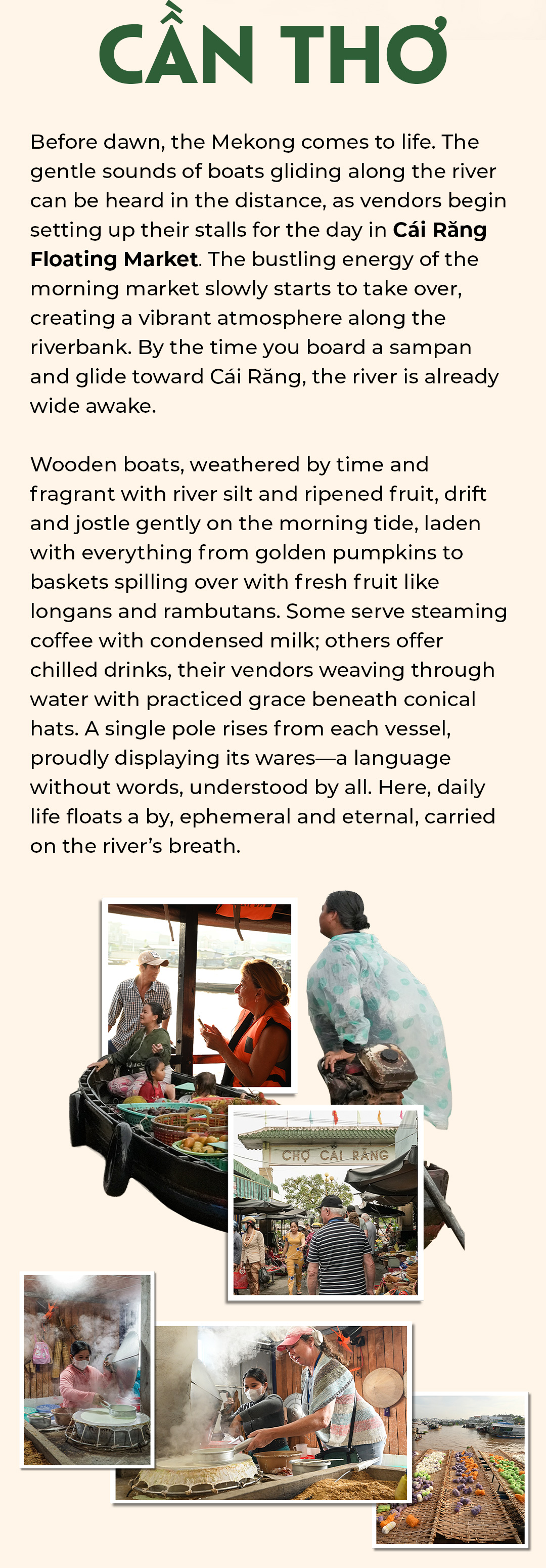
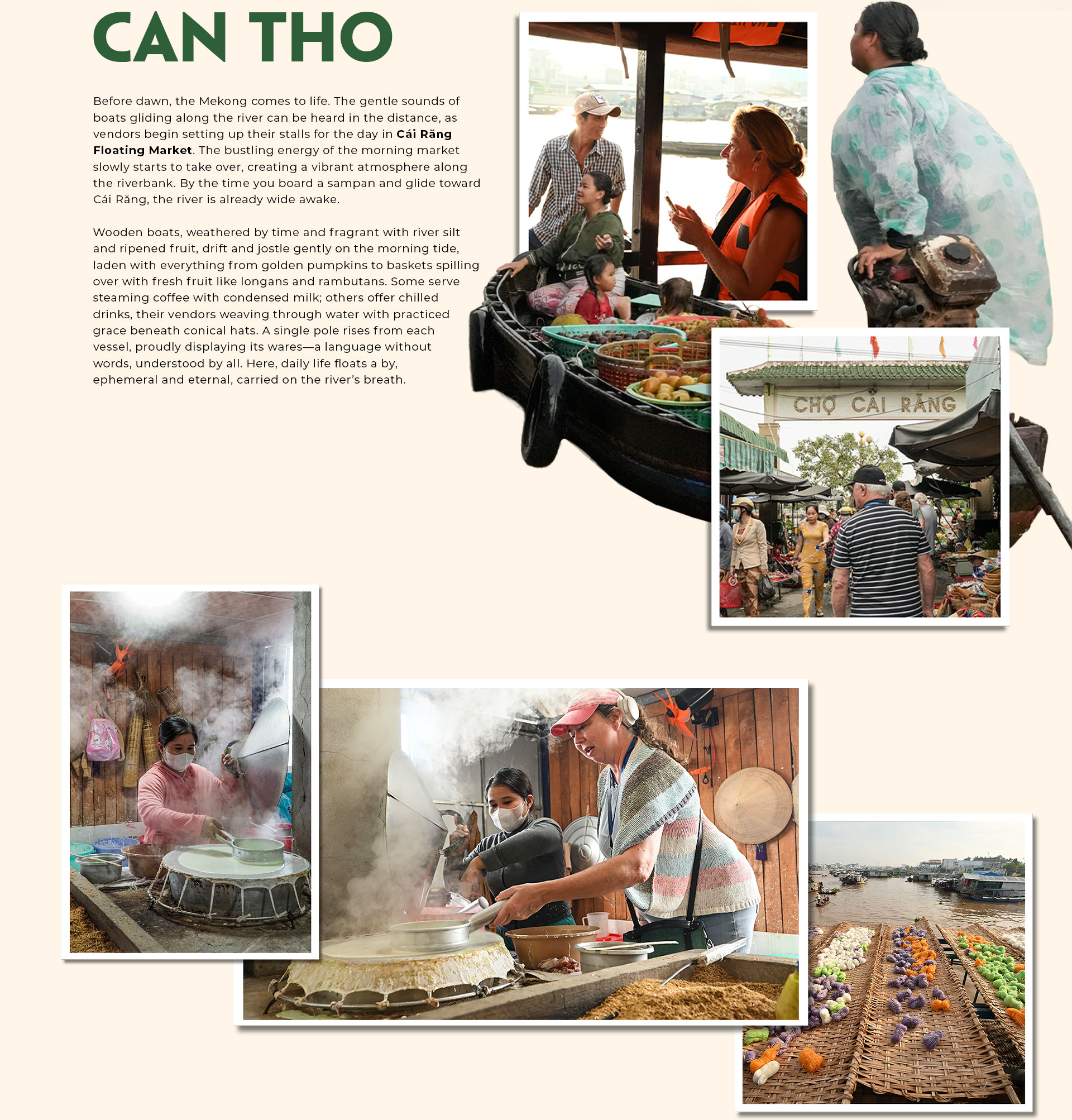
As the sampan glides on, you reach a family-run dried noodle workshop tucked among wooden boats. Inside, the air is rich with warmth and flour, and through open doors you glimpse thin sheets of rice dough drying in the sun—a craft unchanged for generations, passed from hand to hand like the recipe itself. The morning concludes at the local wet market, alive with color and commotion. Beneath striped canvas and a patchwork of umbrellas, vendors sing their wares to a steady stream of buyers and scooter riders, weaving through stalls like fish in a flooded lane.
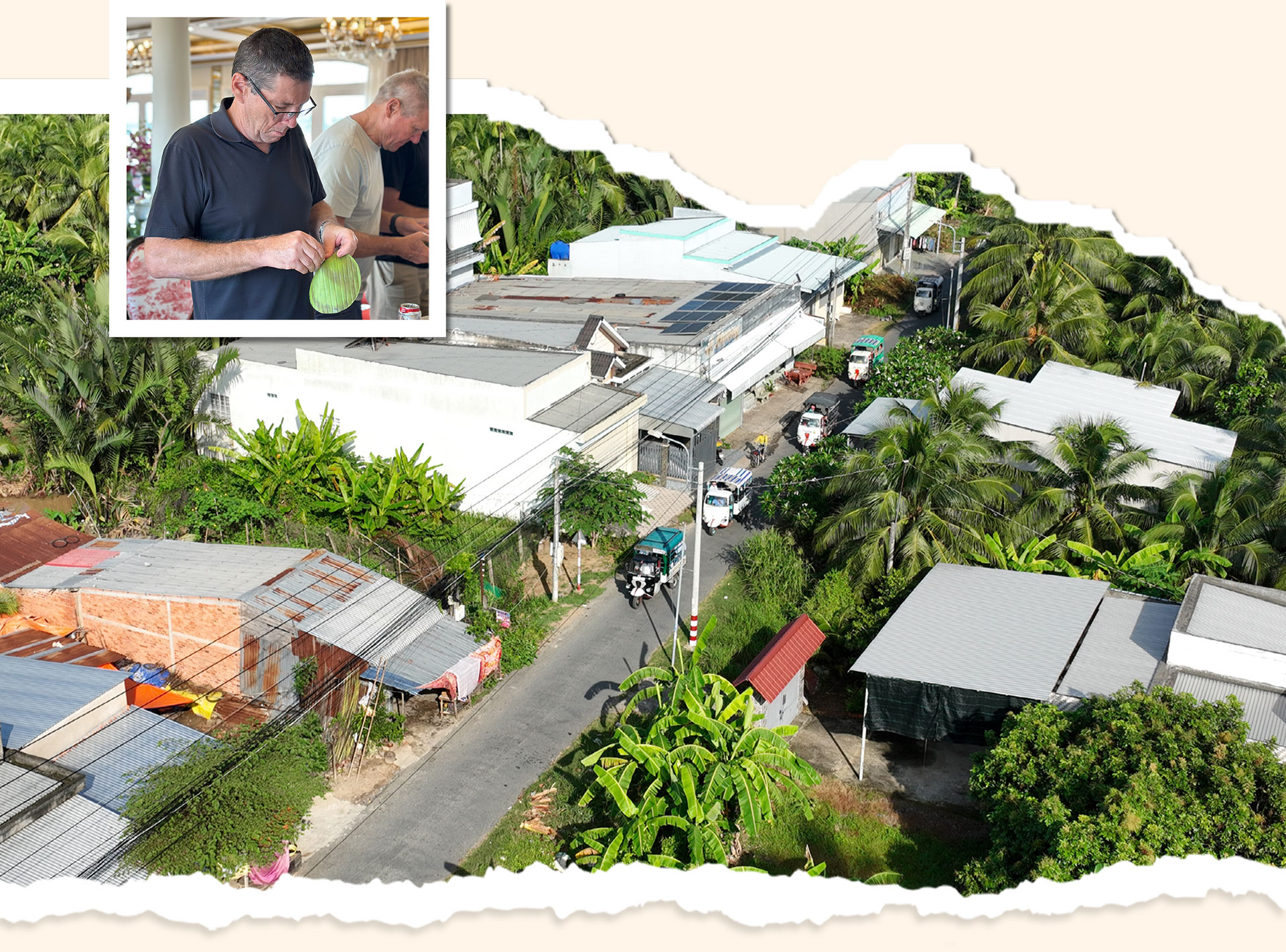

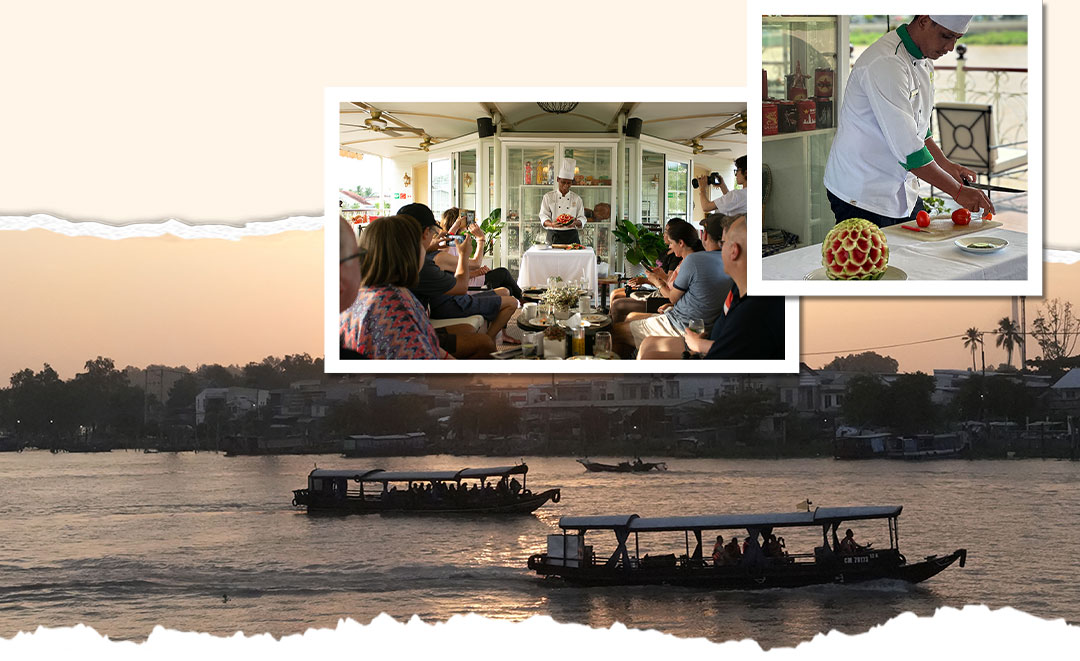
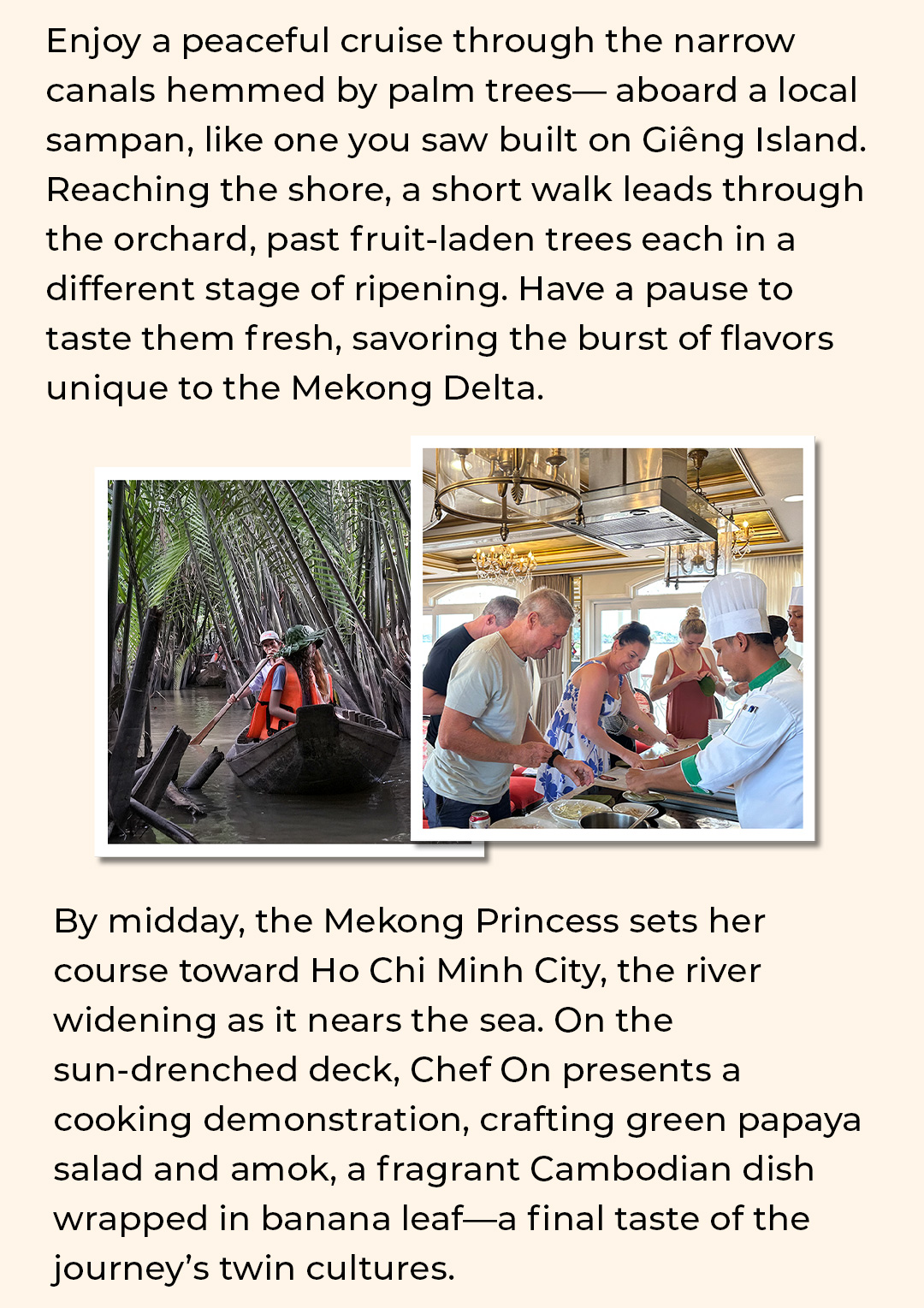
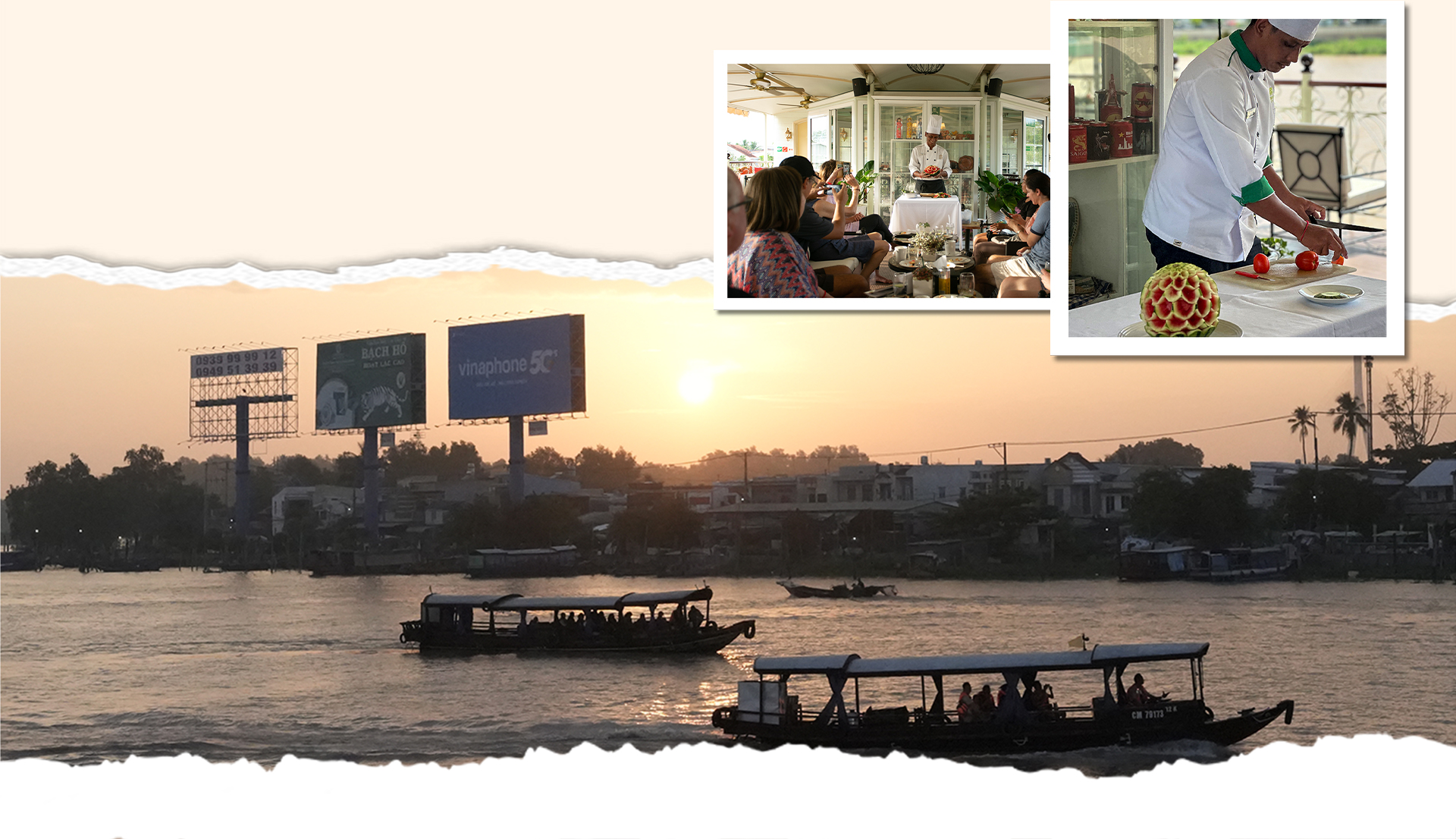
By midday, the Mekong Princess unfurls her moorings and sails downstream toward Bến Tre, while a leisurely lunch is served onboard. As the sun begins to soften, you gather on the top deck, where the Executive Chef presents a tropical tasting—fruit carving, local delicacies, and sweet slices of the Delta’s generous harvest.
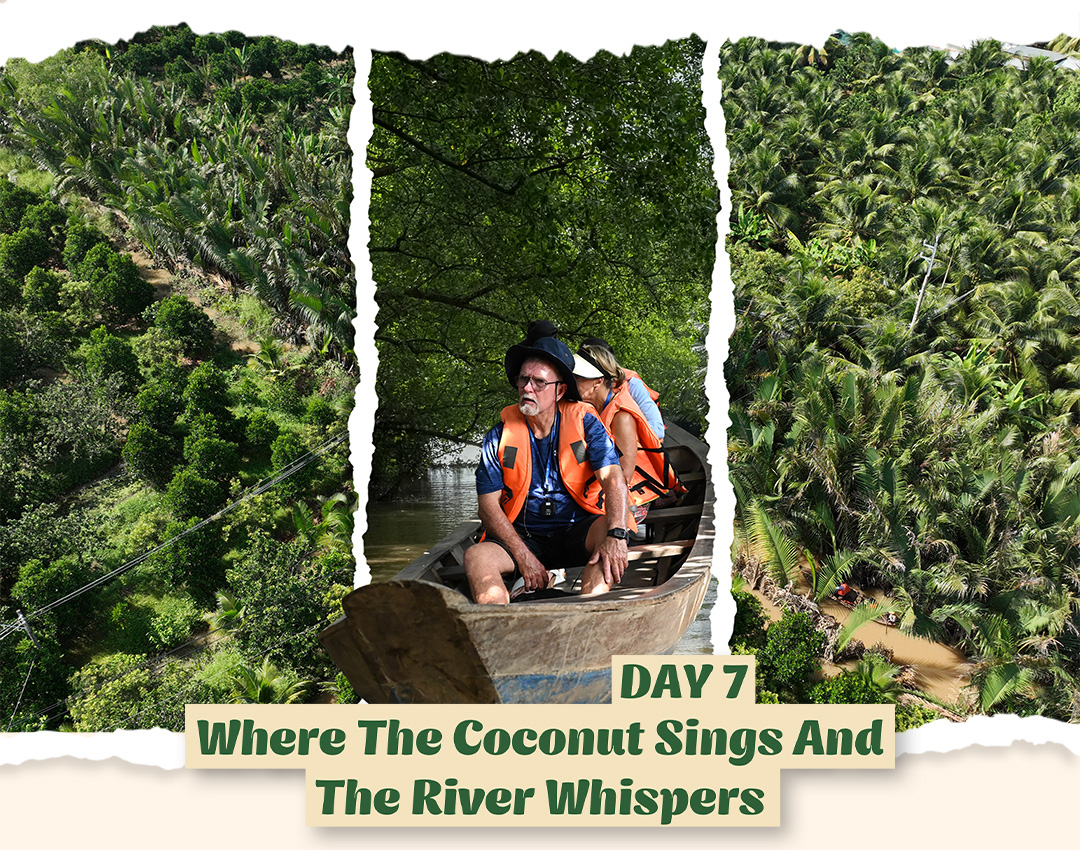
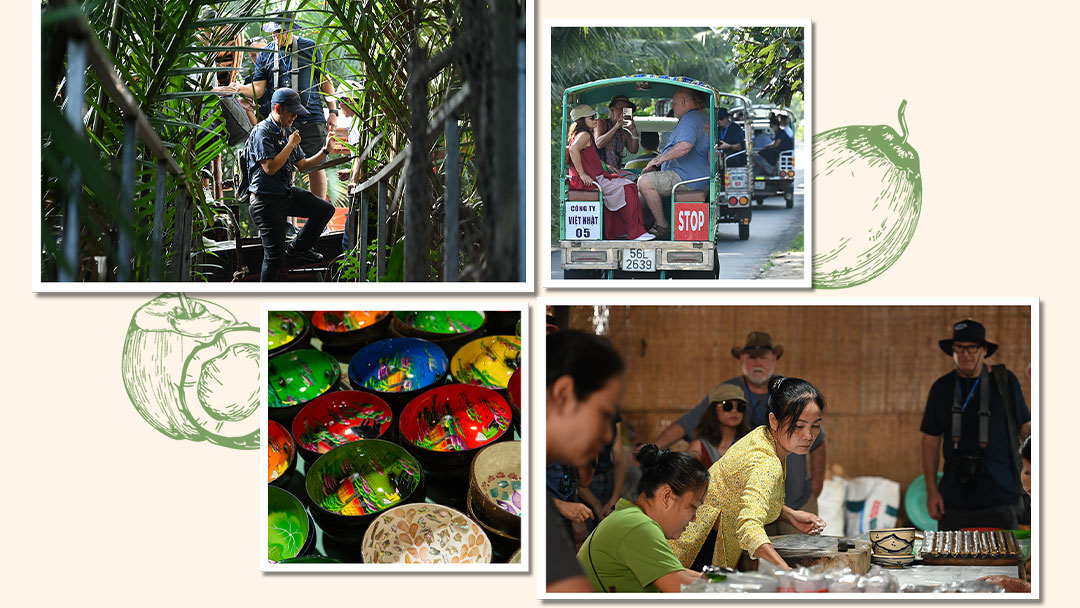
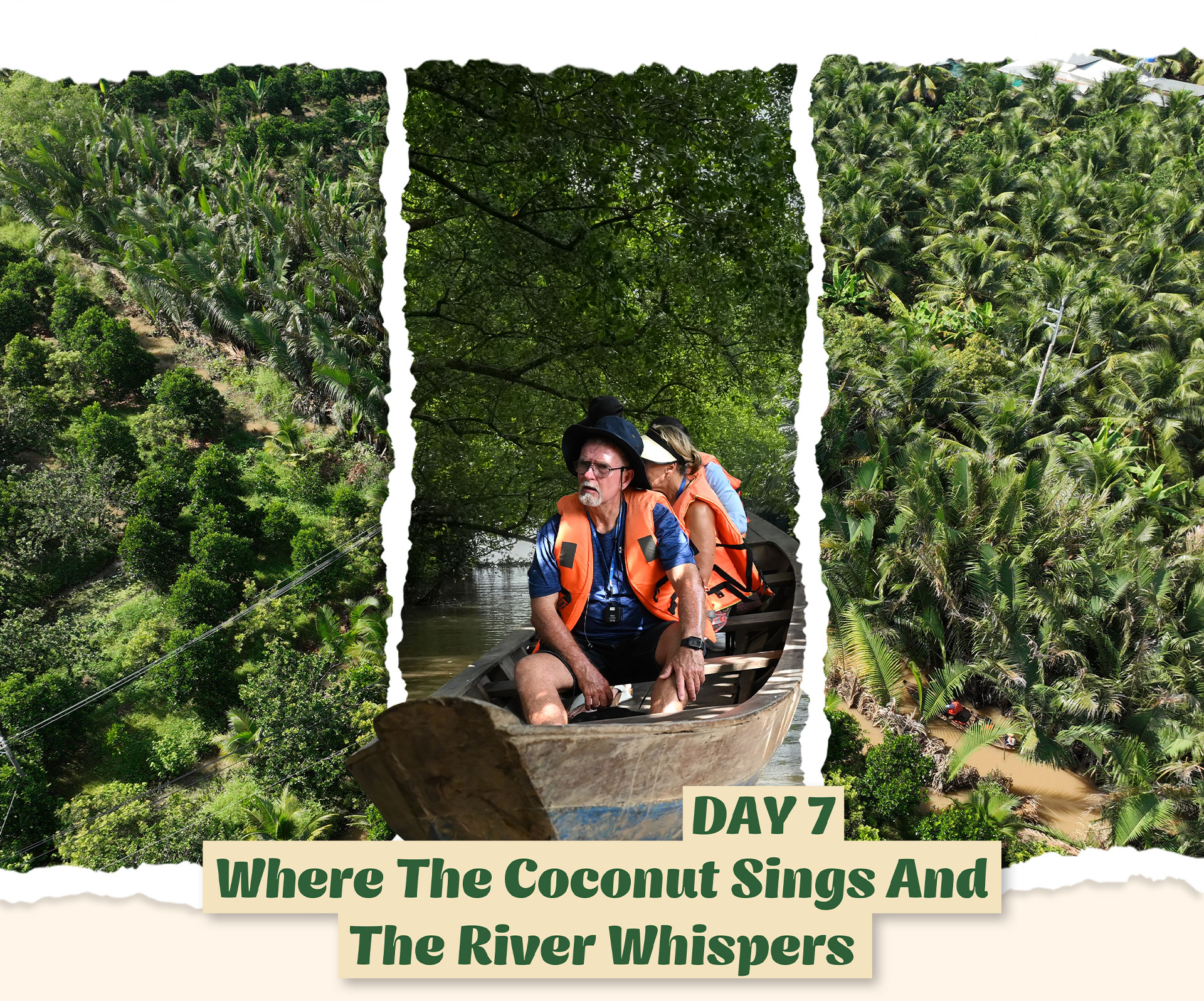
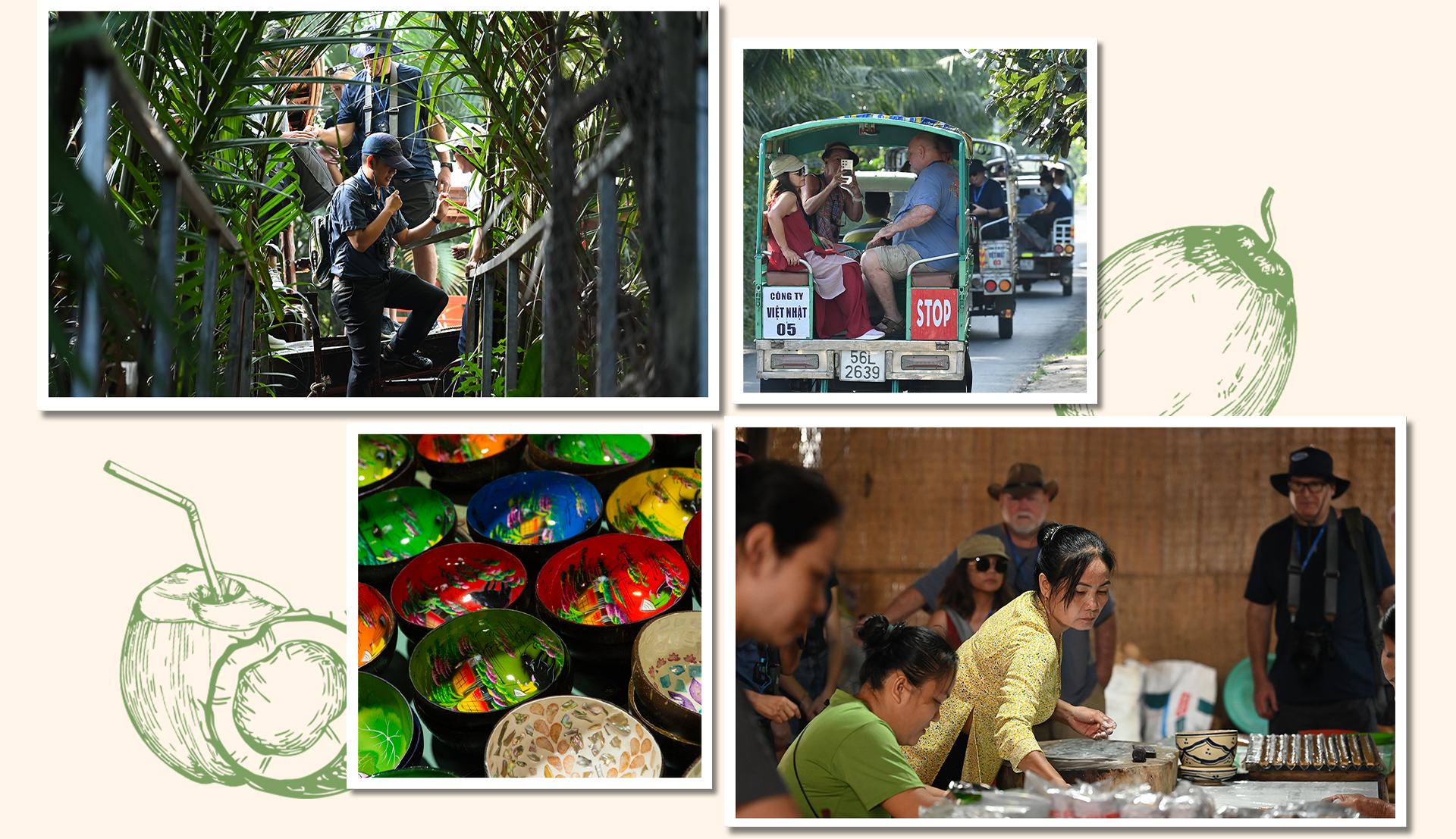
Morning arrives softly in Bến Tre, a name long known to the Vietnamese people as "Coconut Land”. Ashore, a line of xe lam—a vintage three-wheeler that was once the most popular mode of transportation in southern Vietnam—waits to carry you through charming village streets. 
A stop at a modest cottage fills the air with warm sugar as locals prepare traditional coconut candies, a delicacy passed down through generations. Deft hands stir, cut, and wrap the sticky sweet with practiced grace, while coconut wood artisans craft intricate bowls and utensils nearby, showcasing the rich cultural heritage of the region.
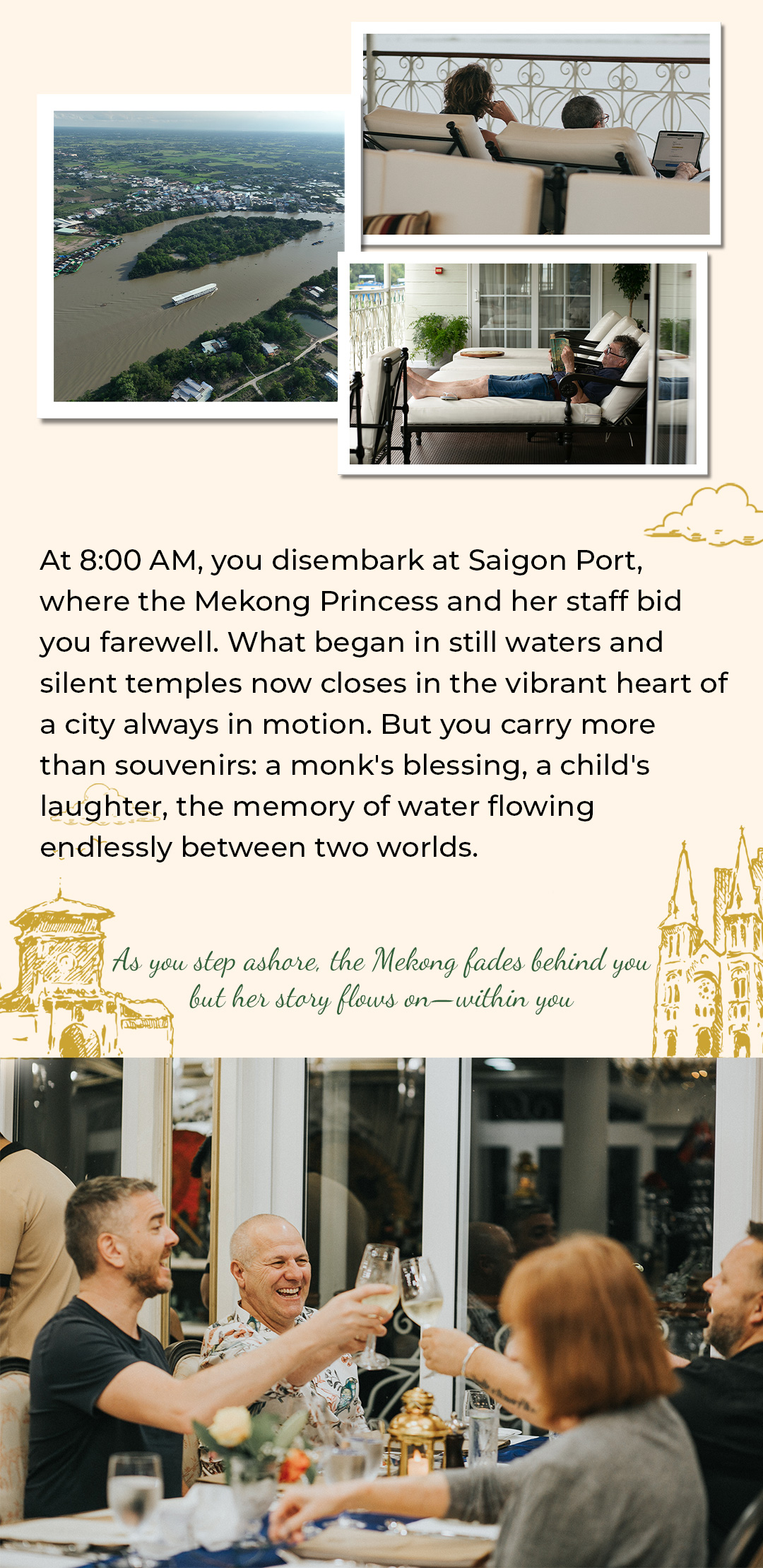
The final morning arrives not with fanfare, but with a hush. Outside the window, Ho Chi Minh City stirs, the hum of life slowly rising. Onboard, breakfast is served with quiet grace, the aroma of fresh bread and tropical fruit mingling with the first light of day.