
Login
Register

Address
Reservation
GUEST VOICES · MEKONG PRINCESS · DAY 3 OF UPSTREAM
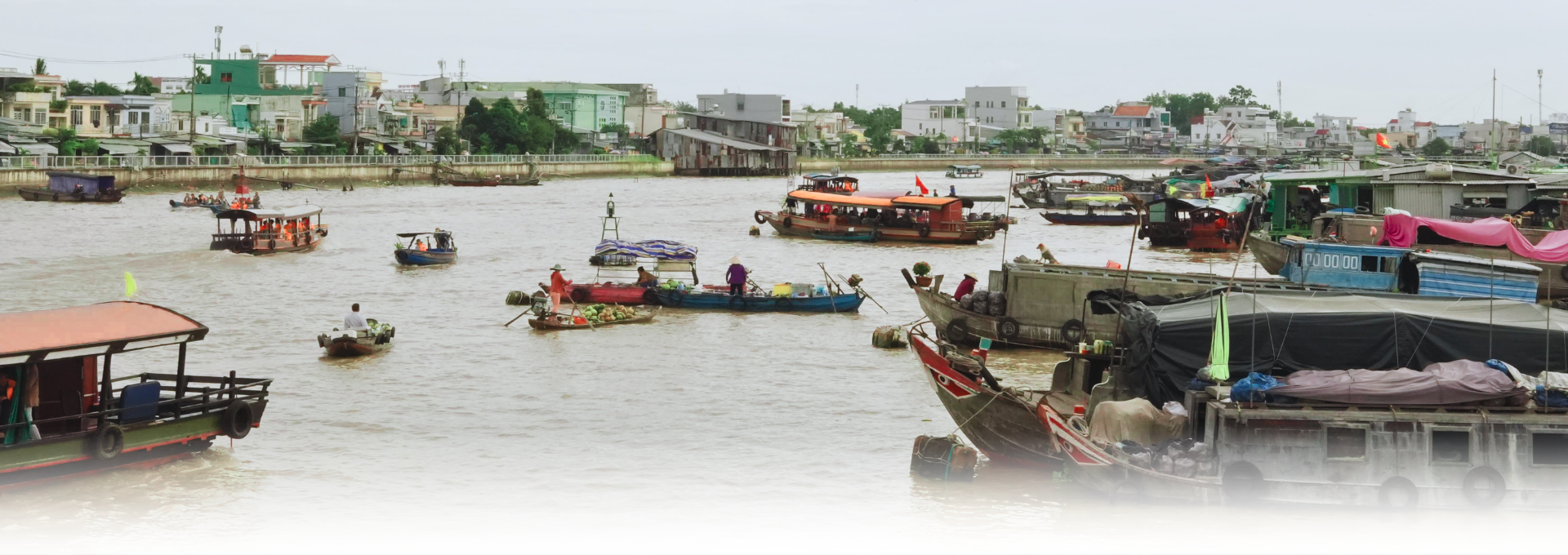
At the floating market
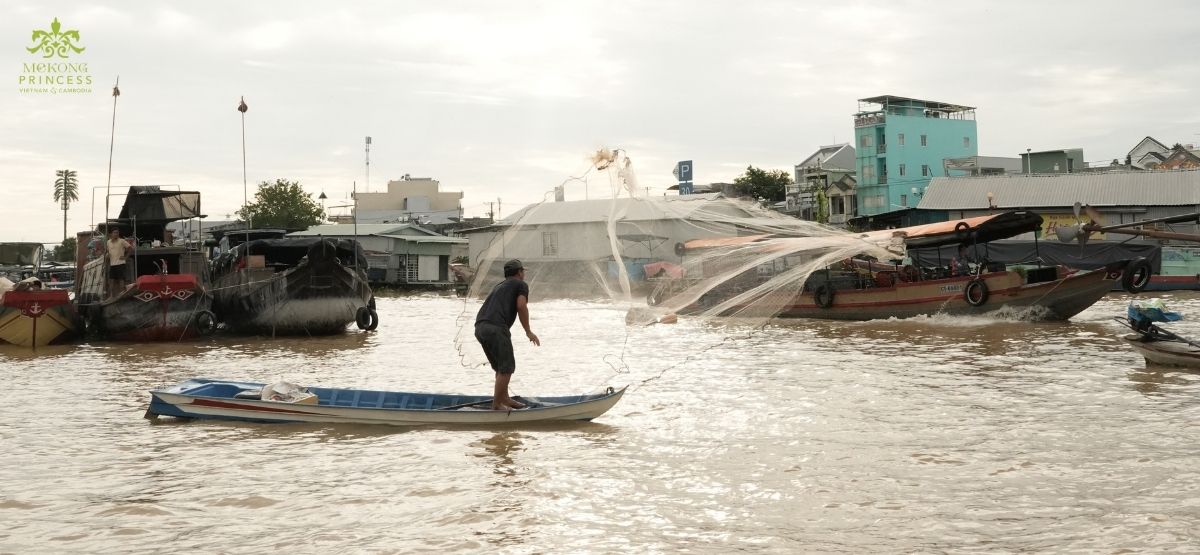
Nothing really prepares you for what it feels like at sunrise. We left the ship just after six and climbed into a small wooden boat as the river was still finding its morning light. By the time Cai Rang came into view, it was already alive with boats of every size moving between each other, vendors calling across the water, families preparing their goods on deck.
What surprised us most was the calm inside all that activity. Produce was not announced by signs but by a tall pole above each bow. A bunch of morning glory to sell morning glory. A dragon fruit to sell dragon fruit. You could read the whole market from a distance. We could have stayed all morning.
"This was such a lively experience, but it's surprisingly calm…It gave us a real sense of how closely people's lives are tied to the river."
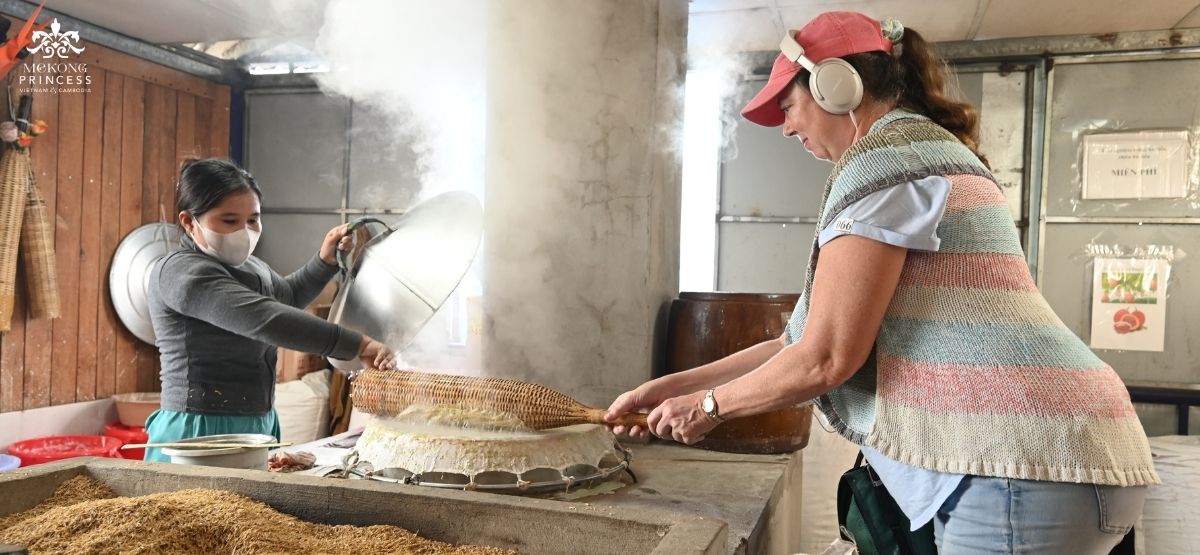
Rice noodles & wet market
As the market settled into its rhythm, we followed the river to a small family-run rice noodle workshop. We watched the whole process from start to finish: rice ground by hand, batter poured onto a steaming drum, thin sheets hung out to dry in the sun, then cut into noodles. One of us declared ourselves a professional rice noodle maker after a single attempt. The family seemed to enjoy the assessment.
From there we wandered into Can Tho wet market, noisy and colourful and unhurried in the way that neighbourhood markets always are. The kind of place where the same vendors have stood in the same spot for decades, and nobody is in any particular rush. We had no agenda and were better for it.
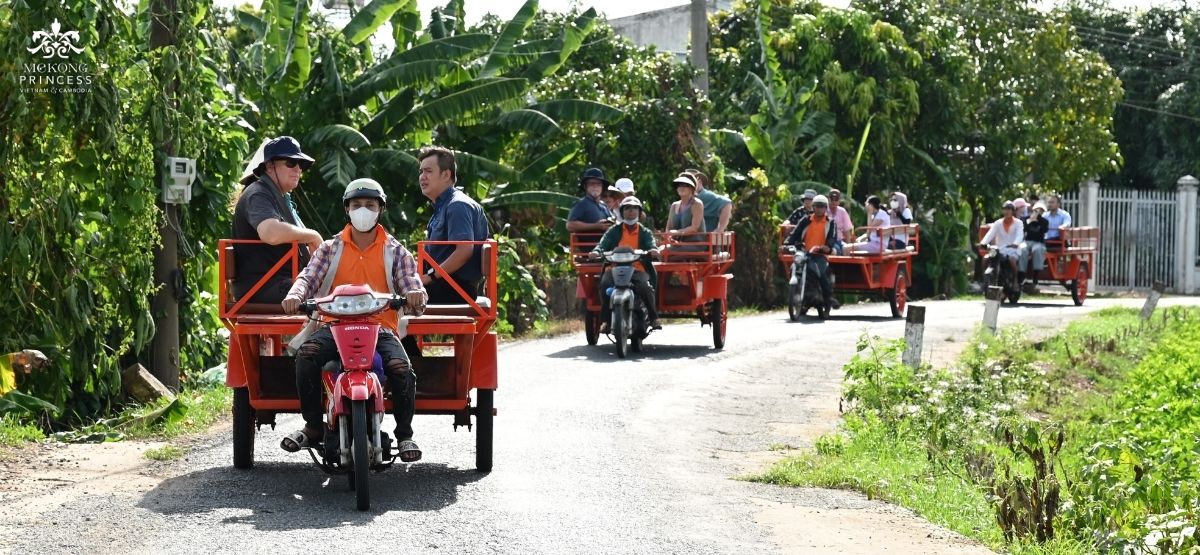
After lunch on board, a small boat carried us to Hoa An, a village of rice fields and orchards that you would not find without someone to take you there. We moved through it by three-wheeled vehicle, the local way of getting around, slow enough to actually notice things. We stopped to walk among the fields and met families in the middle of their working day, growing the crops that feed the region season after season.
On the way back, our boat passed through a busy canal where vessel after vessel arrived to unload rice from all across the delta. Even the quieter stretches of this river are quietly industrial.
Our last stop was a family home where conical straw hats have been made by hand for generations. They welcomed us inside without ceremony and walked us through every step: ironing the leaves flat, stretching them across a bamboo frame, dividing and stitching the layers together with a precision that only comes from doing something your whole life. We watched more than we spoke. It felt like being let into an ordinary afternoon, not a demonstration.
“Day three gave us an even deeper look into life along this river—from the energy of the floating market to the quiet craft of noodle making. It was a day full of things we did not expect, and a reminder of how closely daily life here is connected to the water."
AS FLIMED BY OUR GUESTS
05/23/2026
Or contact us for more information, promotions
(+84) 969 936 954 - mekongprincess@vietprincess.com
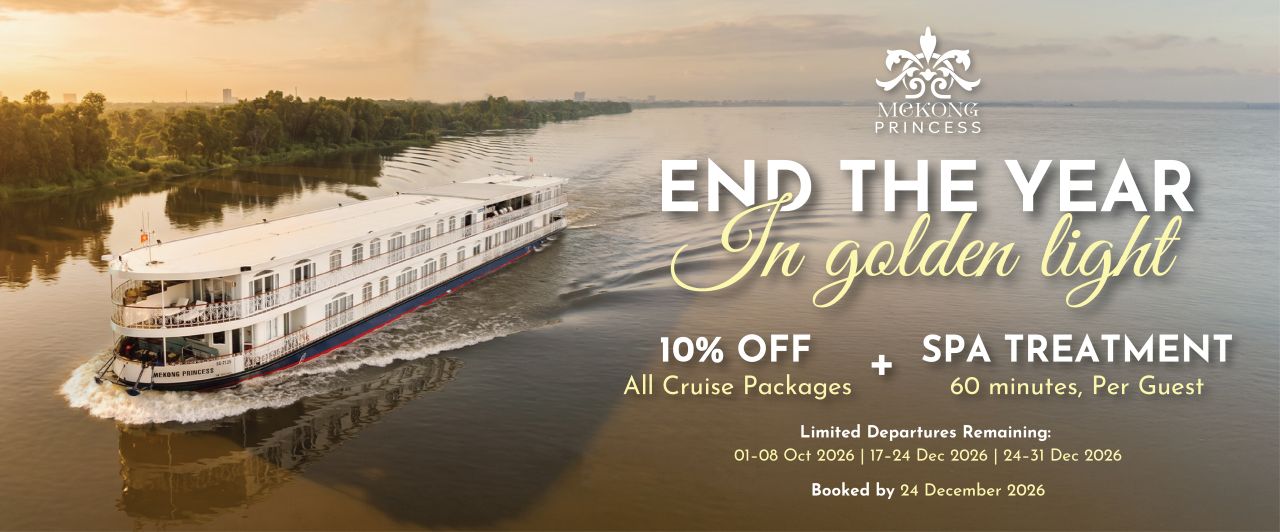
Available on Selected Departures: 01–08 Oct 2026 | 17–24 Dec 2026 | 24–31 Dec 2026